The American Civil War
April 12, 1861
Confederate forces attack Fort Sumter in Charleston, South Carolina, officially starting the American Civil War.
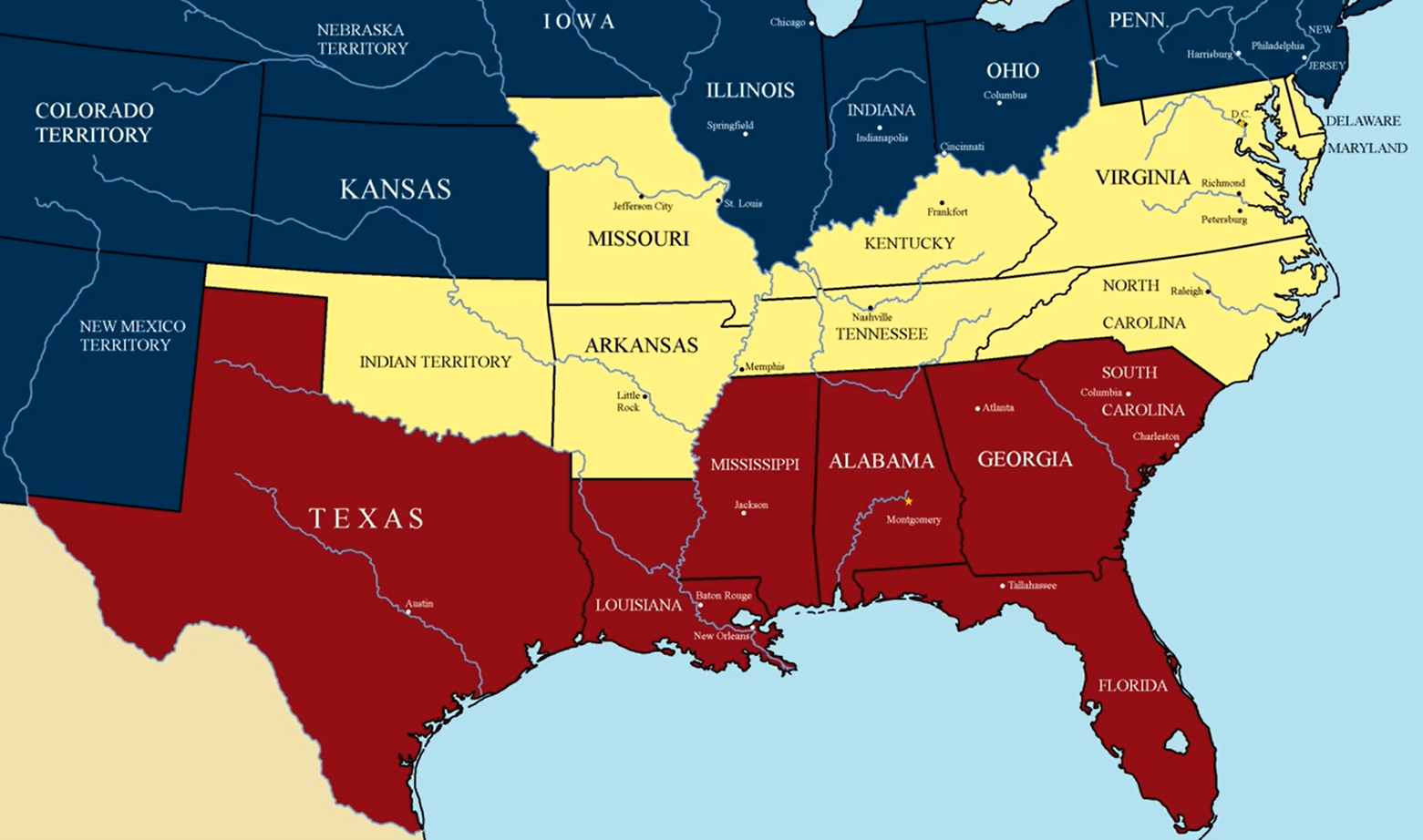
Fig. 1. A map of the United States showing Union states in dark blue, Confederate states in maroon, and the Upper South, Indian Territory, and border states in yellow; screenshot from EmperorTigerstar, "The American Civil War: Every Day," YouTube, 0:13.
July 21, 1861
The First Battle of Bull Run, or the First Battle of Manassas, breaks out near Manassas, Virginia. It is the first major land battle of the American Civil War, ending in a Confederate victory.
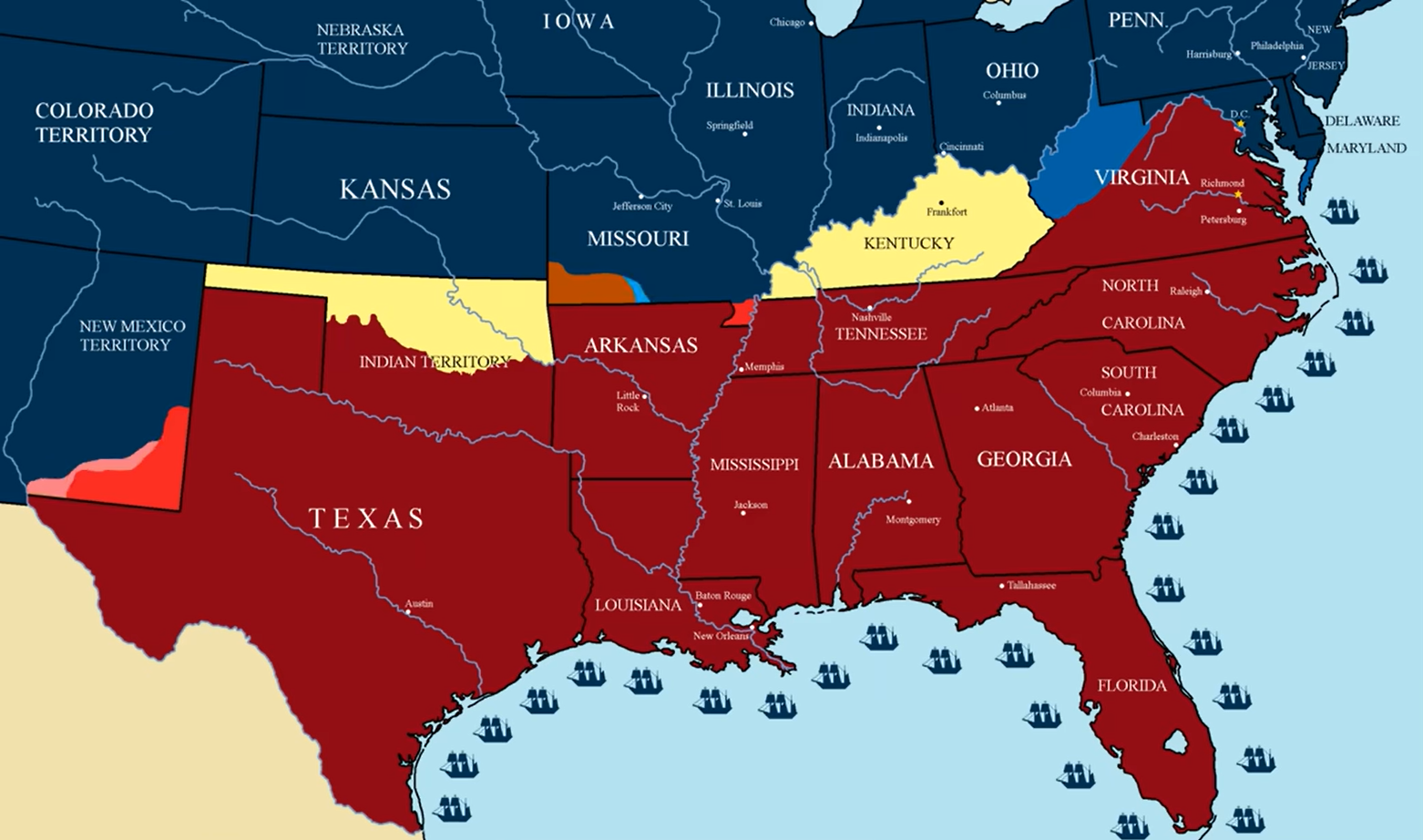
Fig. 2. A map of the United States showing Union states and ships blocking trade in dark blue, Union occupations in blue, Union gains in light blue, Confederate states in maroon, Confederate occupations in red, Confederate gains in pink, Missouri in dark orange, Missouri occupations in orange, Missouri gains in light orange, and the Indian Territory and border states in yellow; screenshot from EmperorTigerstar, "The American Civil War: Every Day," YouTube, 0:33.
April 6-7, 1862
Union forces rally from near defeat at the Battle of Shiloh in Tennessee, forcing a Confederate retreat. Heavy casualties, over 13,000 Union and 11,000 Confederate losses, leave both armies immobilized for three weeks.
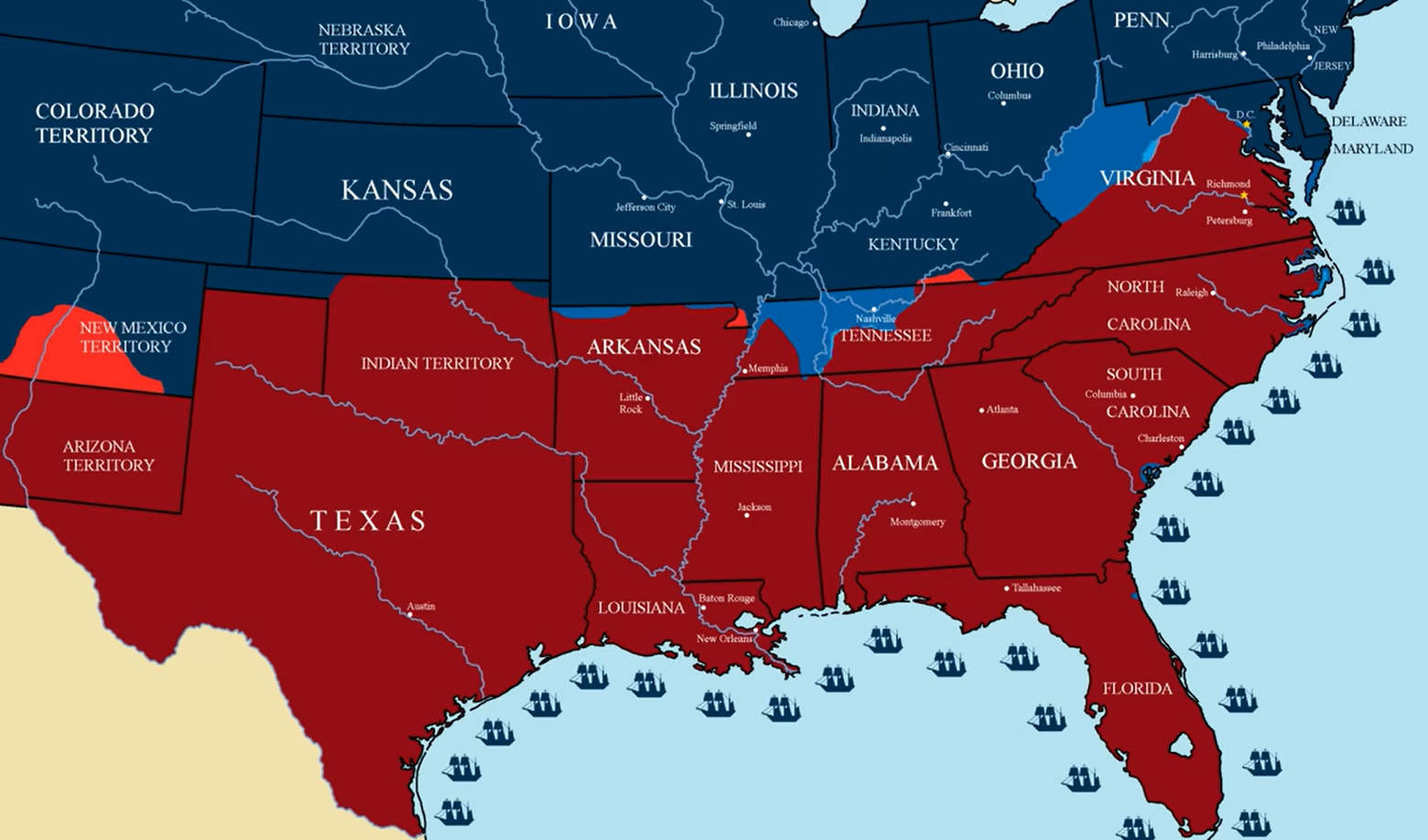
Fig. 3. A map of the United States showing Union states and ships blocking trade in dark blue, Union occupations in blue, Union gains in light blue, Confederate states in maroon, Confederate occupations in red, and Confederate gains in pink; screenshot from EmperorTigerstar, "The American Civil War: Every Day," YouTube, 1:25.
September 17, 1862
The Battle of Antietam becomes the bloodiest single day in American history, shifting the Civil War's purpose to freeing enslaved people in the Confederacy.
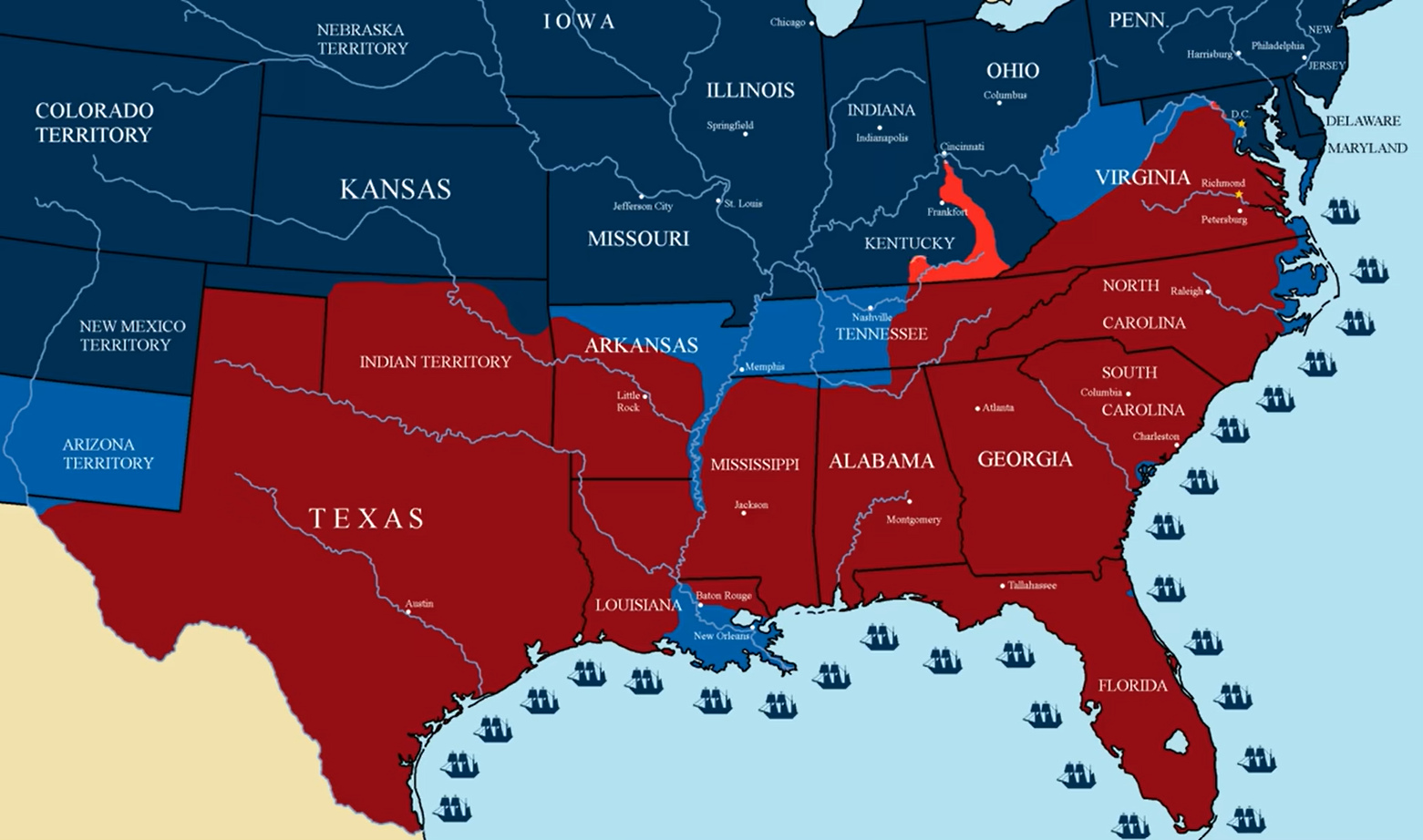
Fig. 4. A map of the United States showing Union states and ships blocking trade in dark blue, Union occupations in blue, Union gains in light blue, Confederate states in maroon, Confederate occupations in red, and Confederate gains in pink; screenshot from EmperorTigerstar, "The American Civil War: Every Day," YouTube, 1:57.
January 1, 1863
President Abraham Lincoln issues the Emancipation Proclamation, freeing enslaved people in the Confederacy, allowing Black men to join the Union army, and stopping European interference.
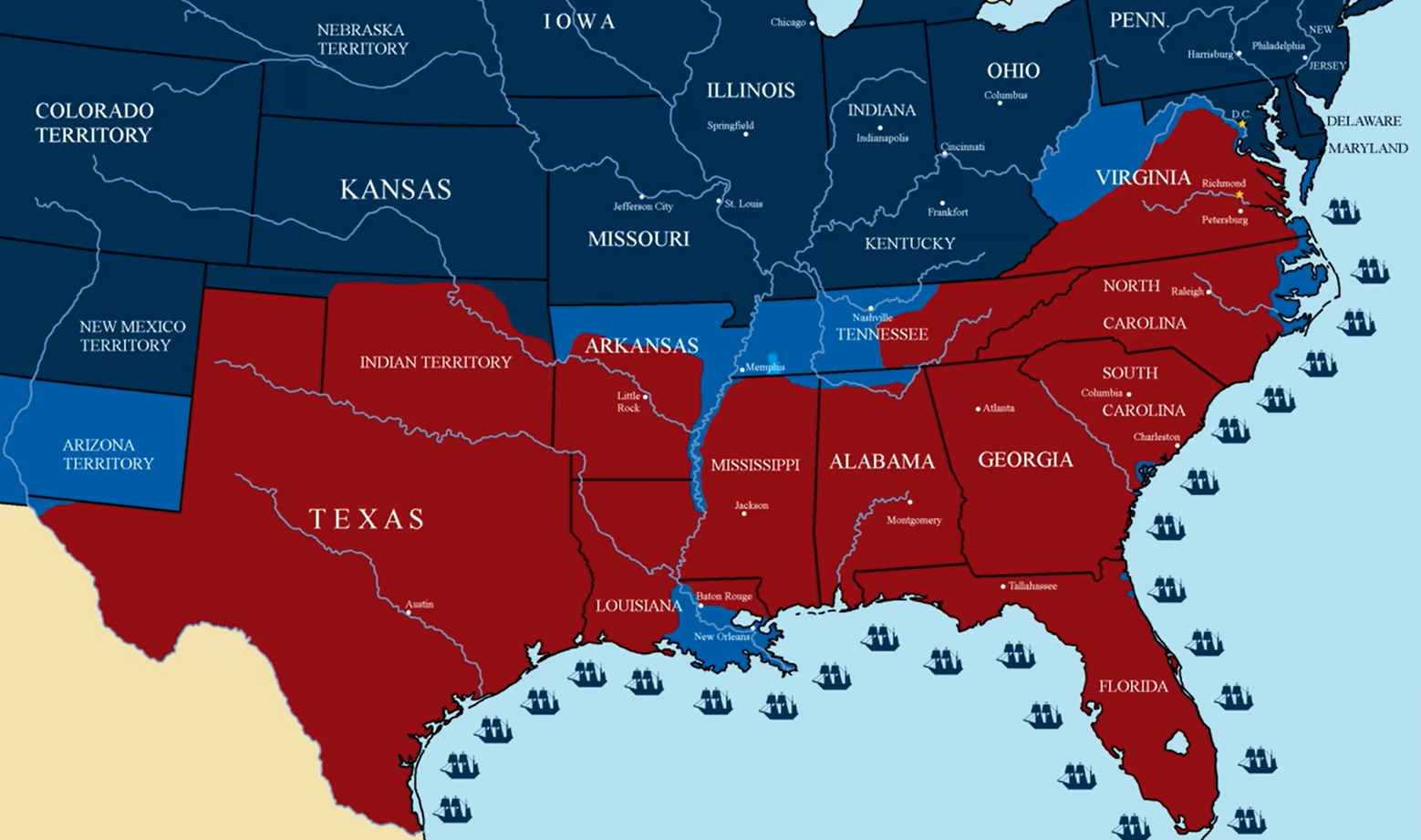
Fig. 5. A map of the United States showing Union states and ships blocking trade in dark blue, Union occupations in blue, Union gains in light blue, Confederate states in maroon, Confederate occupations in red, and Confederate gains in pink; screenshot from EmperorTigerstar, "The American Civil War: Every Day," YouTube, 2:18.
July 1-3, 1863
Confederate forces under General Robert E. Lee battle Union troops at the Battle of Gettysburg in Pennsylvania, marking the turning point of the eastern theater and permanently forcing Lee on the defensive.
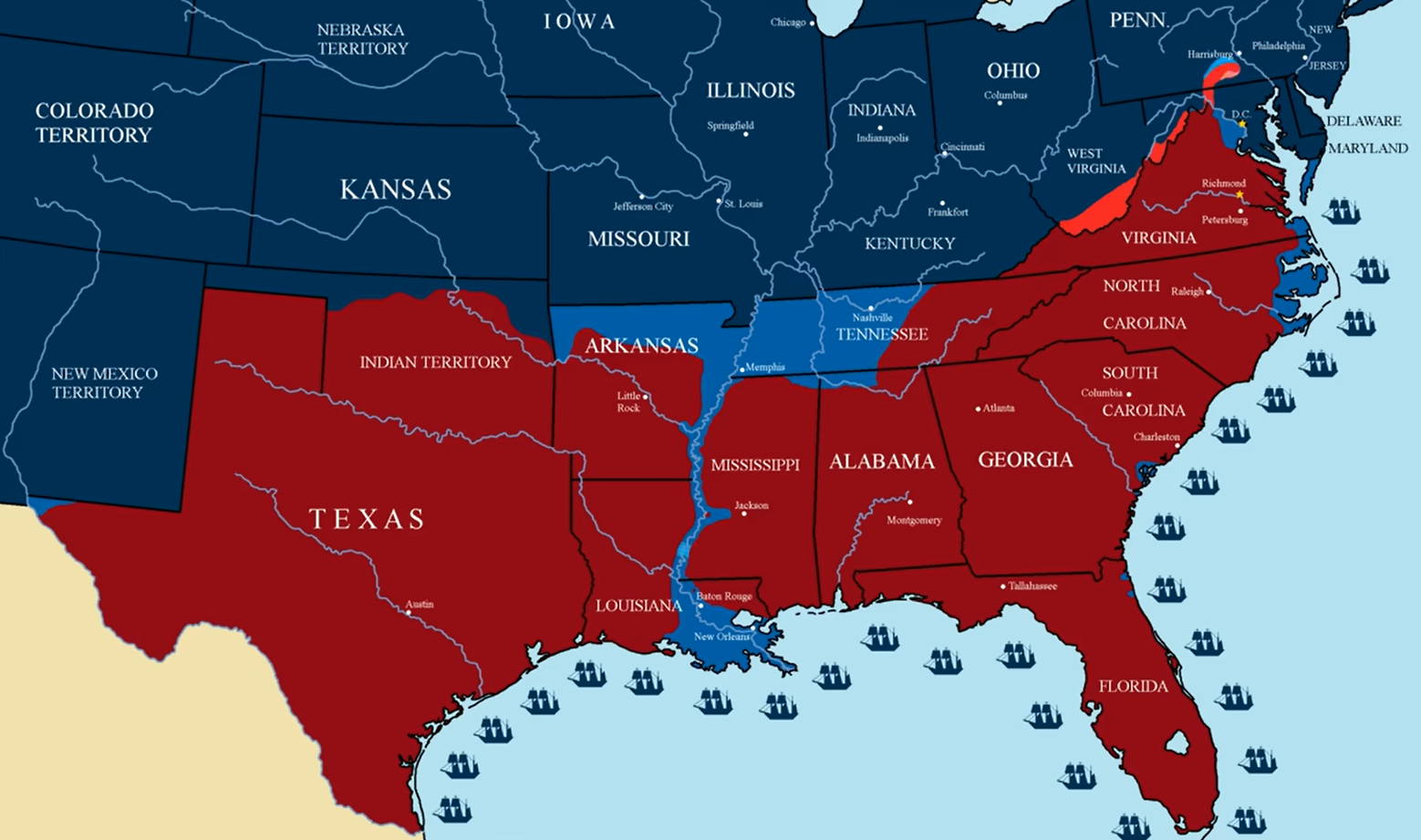
Fig. 6. A map of the United States showing Union states and ships blocking trade in dark blue, Union occupations in blue, Union gains in light blue, Confederate states in maroon, Confederate occupations in red, and Confederate gains in pink; screenshot from EmperorTigerstar, "The American Civil War: Every Day," YouTube, 2:55.
July 4, 1863
General Ulysses S. Grant captures Vicksburg, securing the Mississippi River for the Union and splitting the Confederacy in half.
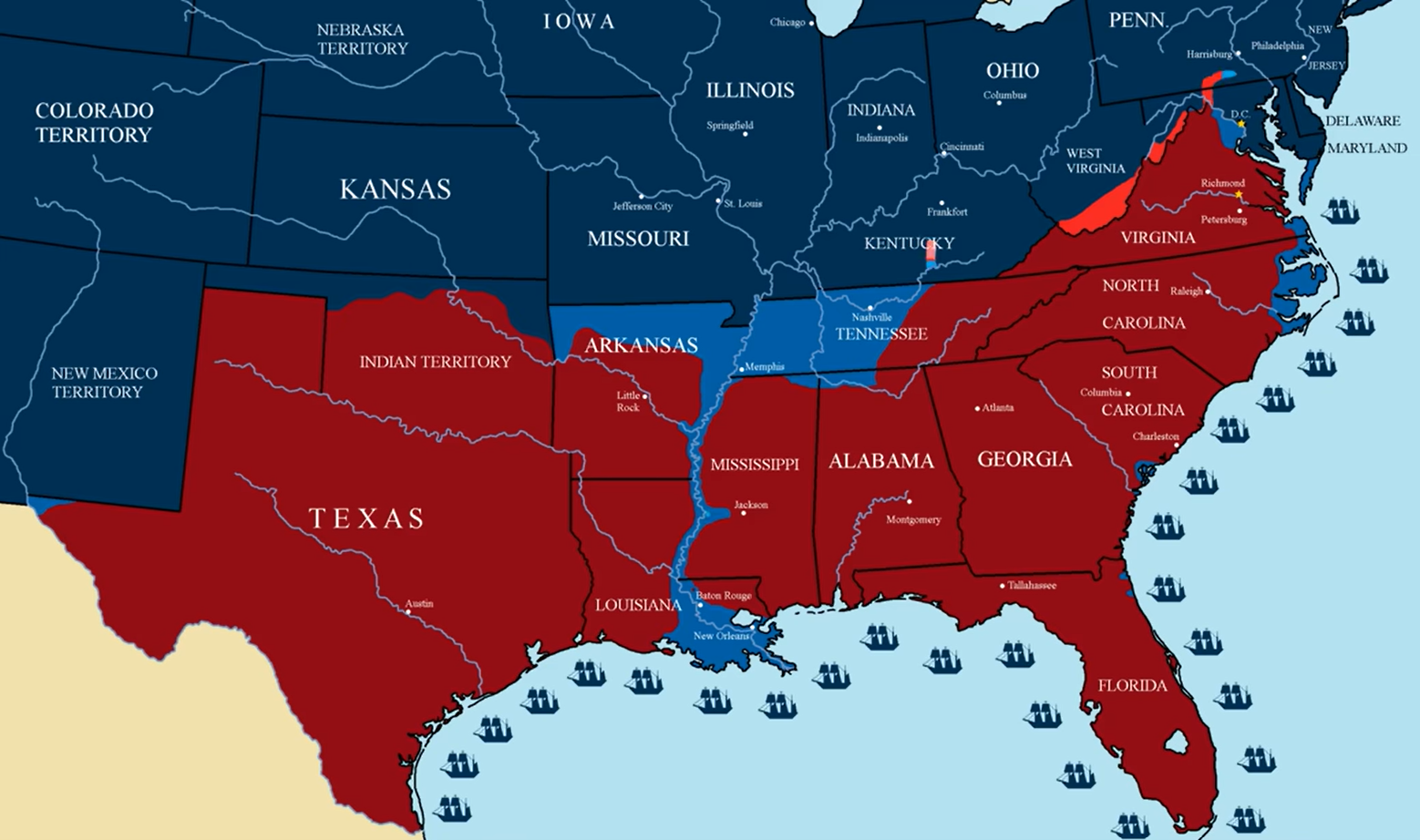
Fig. 7. A map of the United States showing Union states and ships blocking trade in dark blue, Union occupations in blue, Union gains in light blue, Confederate states in maroon, Confederate occupations in red, and Confederate gains in pink; screenshot from EmperorTigerstar, "The American Civil War: Every Day," YouTube, 2:55.
September 2, 1864
General William T. Sherman captures Atlanta and wages total war across the South. His troops destroy railroads, crops, and industries to weaken Confederate support for the war.
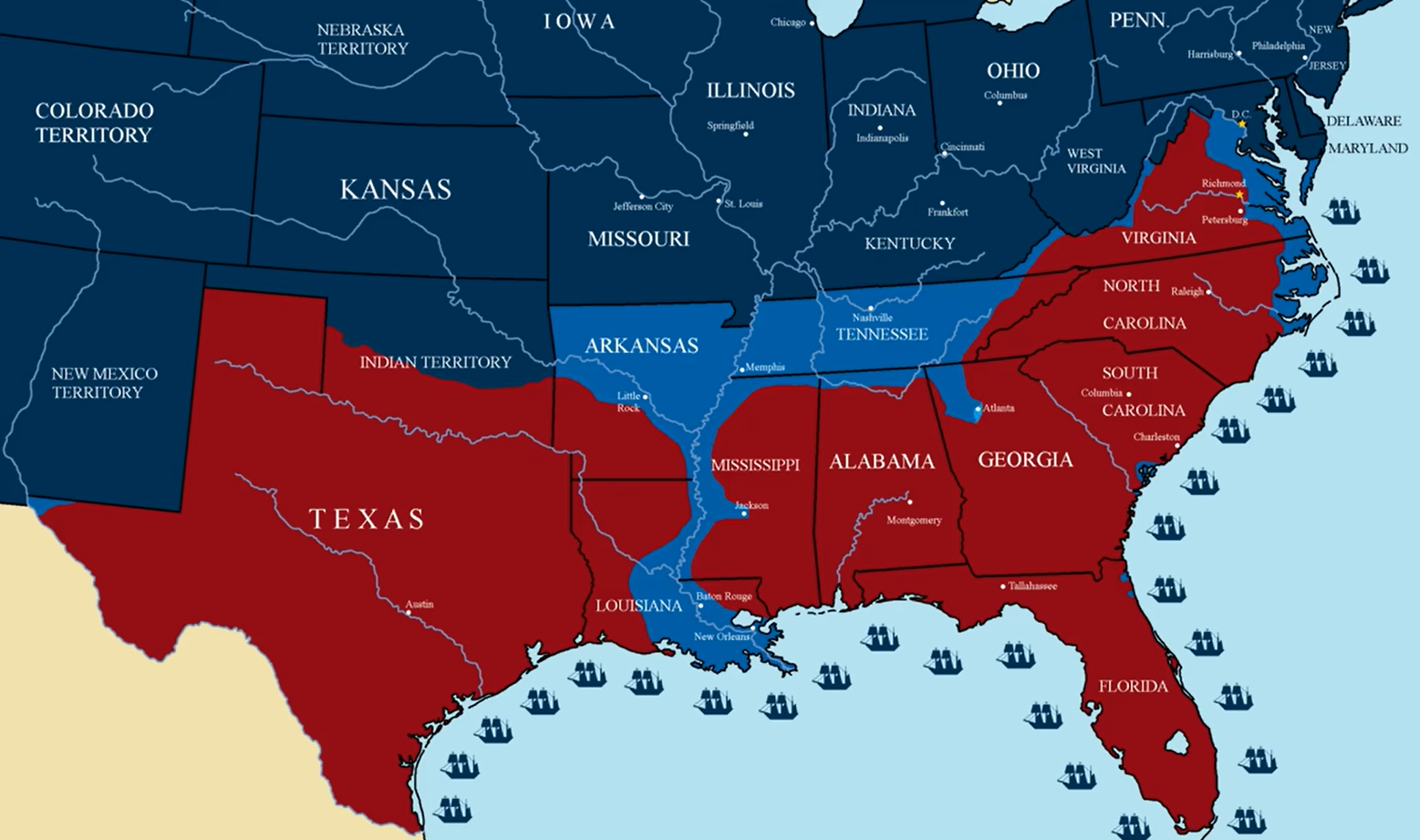
Fig. 8. A map of the United States showing Union states and ships blocking trade in dark blue, Union occupations in blue, Union gains in light blue, Confederate states in maroon, Confederate occupations in red, and Confederate gains in pink; screenshot from EmperorTigerstar, "The American Civil War: Every Day," YouTube, 4:20.
April 9, 1865
General Lee surrenders to Grant at Appomattox Court House, ending the Civil War in Virginia.
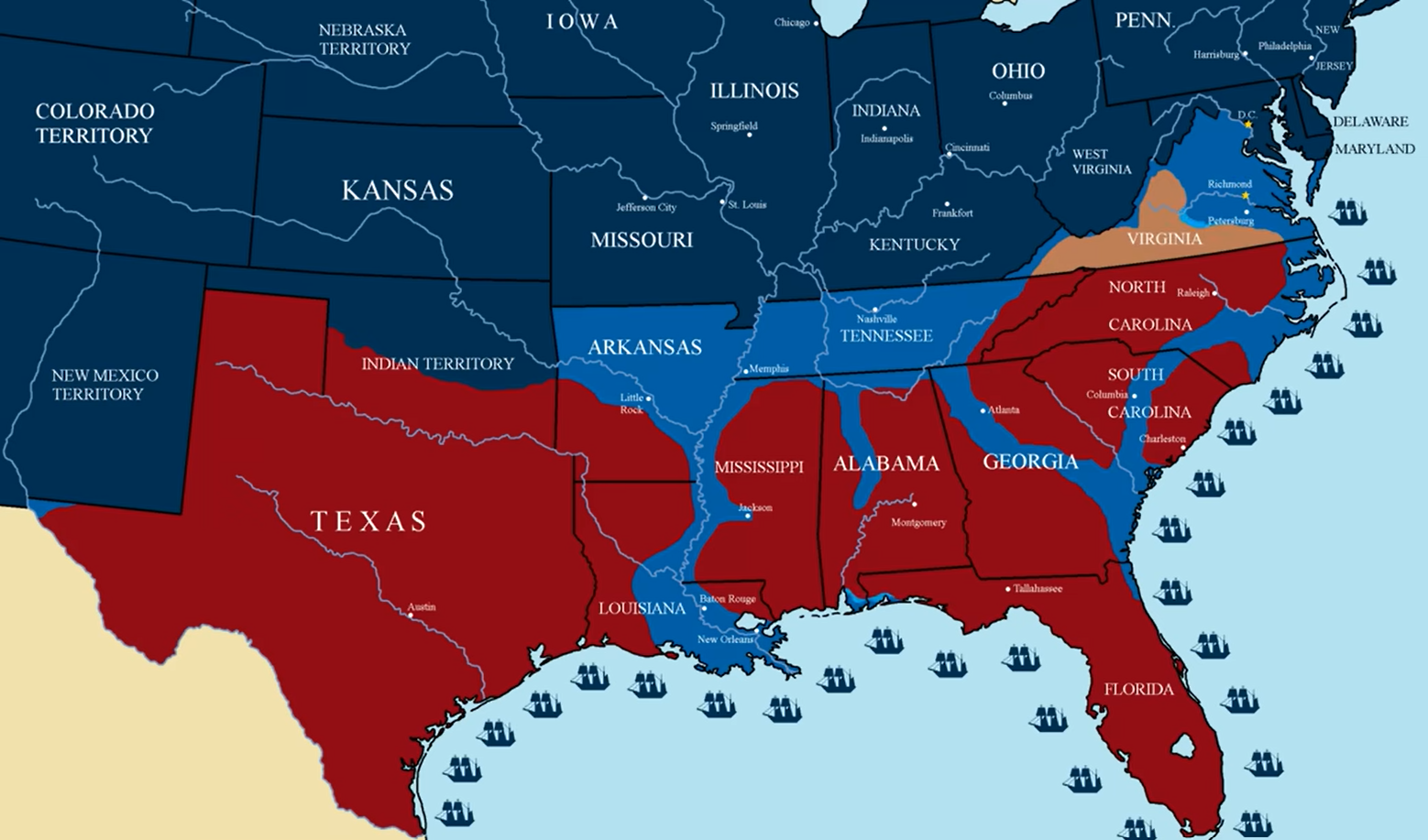
Fig. 9. A map of the United States showing Union states and ships blocking trade in dark blue, Union occupations in blue, Union gains in light blue, Confederate states in maroon, Confederate occupations in red, Confederate gains in pink, and surrendered states in brown; screenshot from EmperorTigerstar, "The American Civil War: Every Day," YouTube, 5:04.
April 14, 1865
John Wilkes Booth shoots President Lincoln at Ford’s Theatre. Following Lincoln's death the next morning, Vice President Andrew Johnson becomes the president. The sudden death of President Lincoln complicates reconciliation between the North and South.
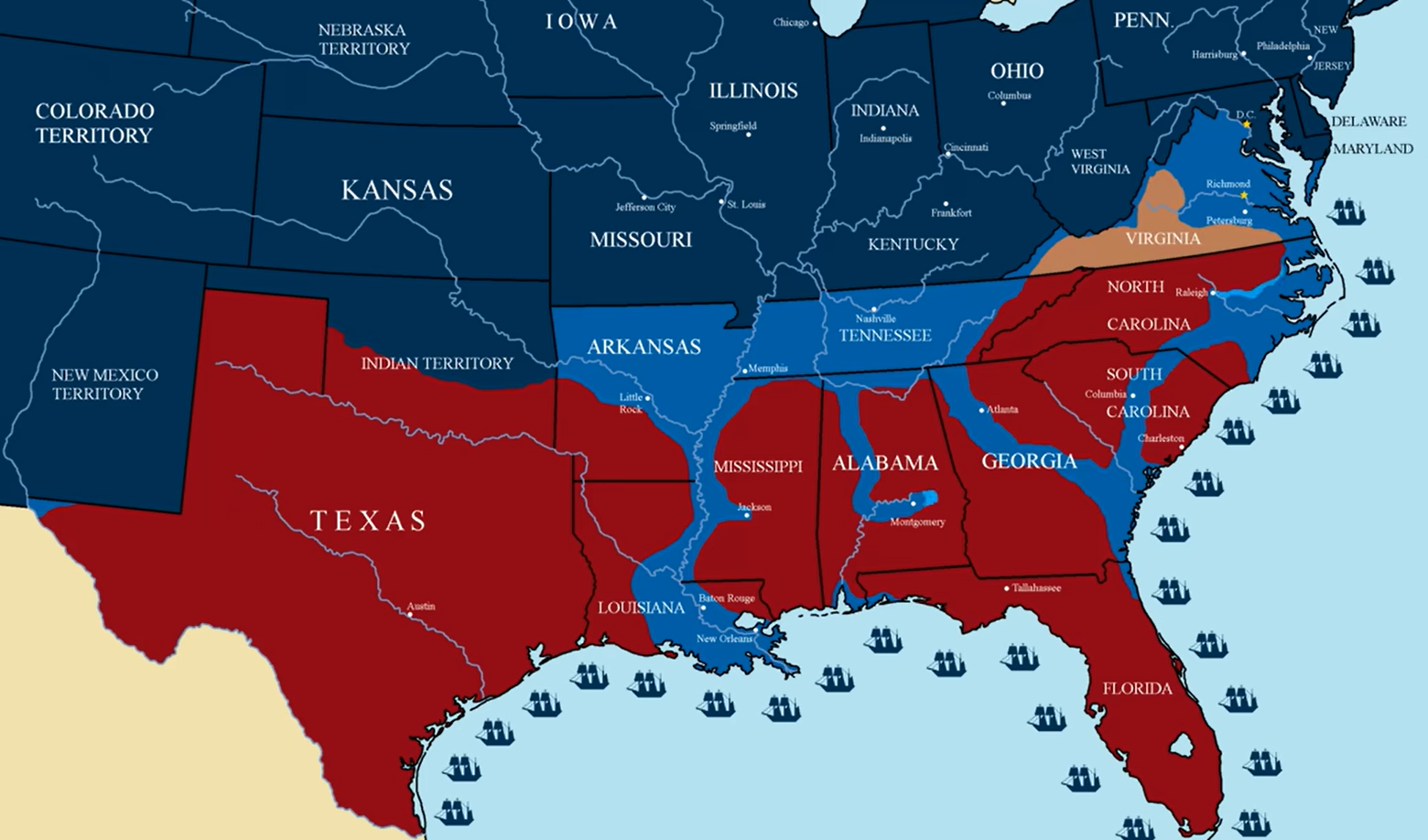
Fig. 10. A map of the United States showing Union states and ships blocking trade in dark blue, Union occupations in blue, Union gains in light blue, Confederate states in maroon, Confederate occupations in red, Confederate gains in pink, and surrendered states in brown; screenshot from EmperorTigerstar, "The American Civil War: Every Day," YouTube, 5:05.
Bibliography
The Editors of Encyclopaedia Britannica. "American Civil War Timeline." Encyclopedia Britannica. October 2, 2020. https://www.britannica.com/summary/American-Civil-War-Timeline.