World War I
July 28, 1914
Following the assassination of Archduke Franz Ferdinand, Austria-Hungary declares war on Serbia. This critical spark activates a web of European alliances, officially starting World War I and plunging the global community into a four-year conflict.
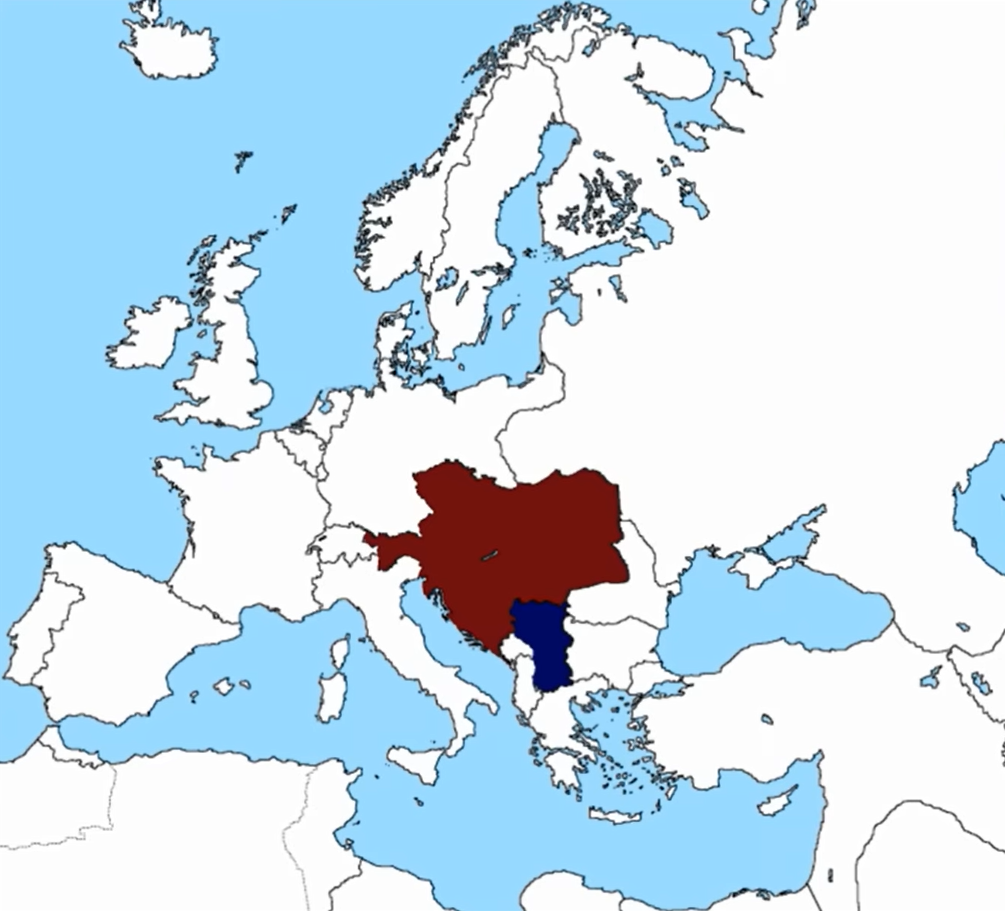
Fig. 1. A map of Europe showing Allied Powers in dark blue, Allied occupations in blue, Allied gains in light blue, Central Powers in maroon, Central occupations in burgundy, Central puppet states in red, and Central gains in pink; screenshot from EmperorTigerstar, "World War I: Every Day," YouTube, 0:10.
August 4, 1914
Britain officially declares war on Germany. This action marks Britain's entry into World War I after Germany invades neutral Belgium, violating the 1839 Treaty of London.
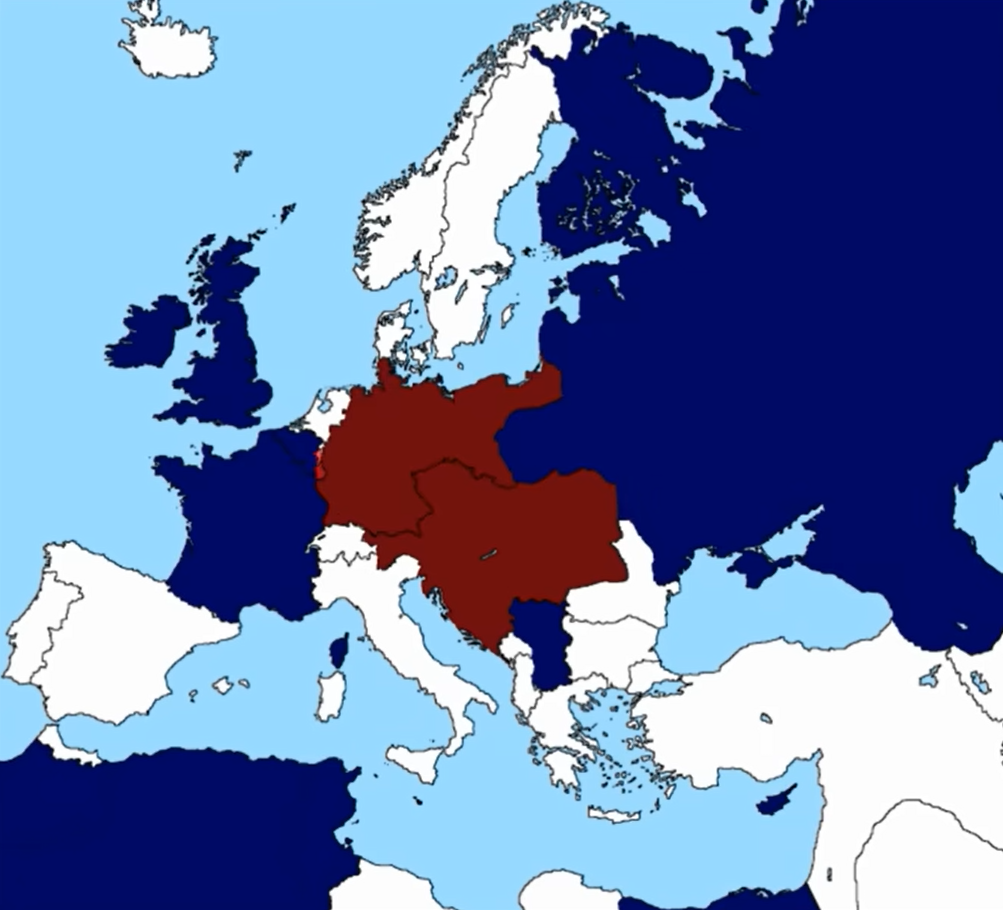
Fig. 2. A map of Europe showing Allied Powers in dark blue, Allied occupations in blue, Allied gains in light blue, Central Powers in maroon, Central occupations in burgundy, Central puppet states in red, and Central gains in pink; screenshot from EmperorTigerstar, "World War I: Every Day," YouTube, 0:11.
September 6, 1914
The First Battle of the Marne begins as German forces approach Paris. French troops use hundreds of Paris taxis for a bold counterattack. This clash halts the German advance 30 miles outside Paris and leads to four years of brutal trench warfare.
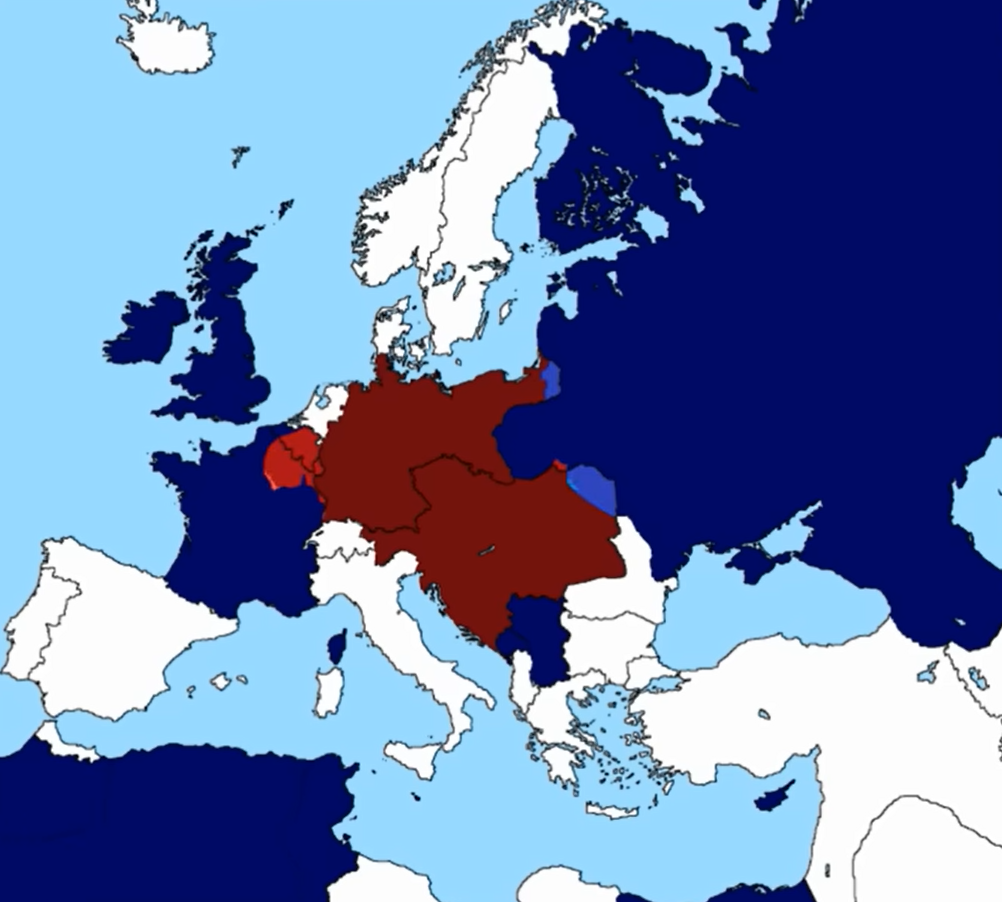
Fig. 3. A map of Europe showing Allied Powers in dark blue, Allied occupations in blue, Allied gains in light blue, Central Powers in maroon, Central occupations in burgundy, Central puppet states in red, and Central gains in pink; screenshot from EmperorTigerstar, "World War I: Every Day," YouTube, 0:18.
April 22, 1915
The Second Battle of Ypres begins as the German army launches the first major chlorine gas attack on Allied trenches, killing 5,000 troops and starting the modern era of chemical warfare, which ultimately caused 1.3 million casualties, including 91,000 deaths, by the end of World War I.
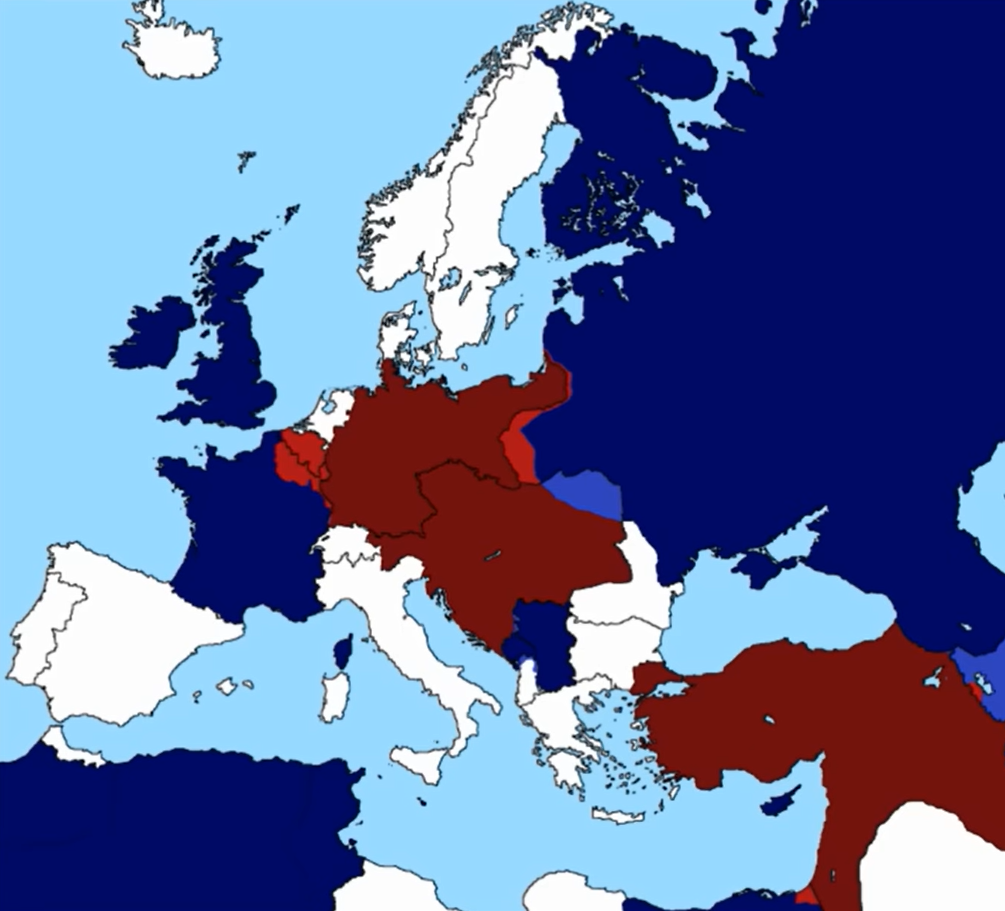
Fig. 4. A map of Europe showing Allied Powers in dark blue, Allied occupations in blue, Allied gains in light blue, Central Powers in maroon, Central occupations in burgundy, Central puppet states in red, and Central gains in pink; screenshot from EmperorTigerstar, "World War I: Every Day," YouTube, 1:03.
April 25, 1915
Allied troops land at Cape Helles and ANZAC Cove on the Gallipoli Peninsula. This begins a disastrous nine-month campaign that costs over 200,000 Allied casualties. The failed offensive defines ANZAC military identity and triggers the collapse of the British government.
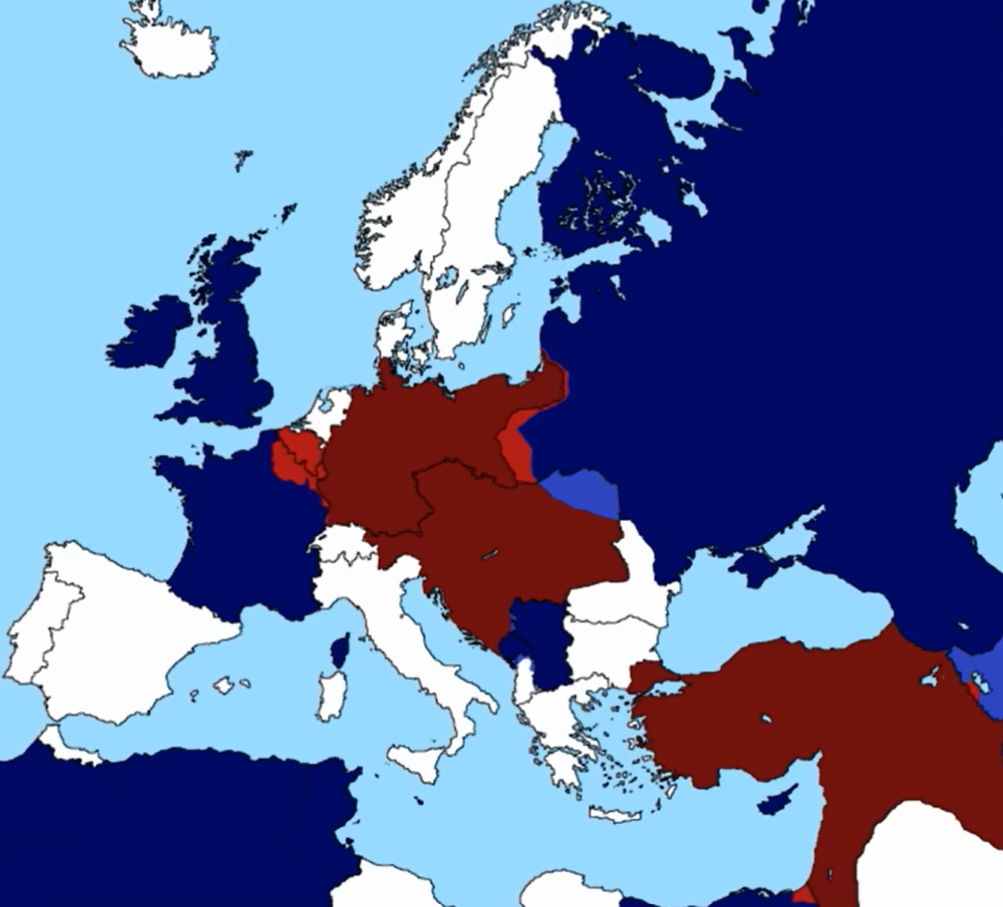
Fig. 5. A map of Europe showing Allied Powers in dark blue, Allied occupations in blue, Allied gains in light blue, Central Powers in maroon, Central occupations in burgundy, Central puppet states in red, and Central gains in pink; screenshot from EmperorTigerstar, "World War I: Every Day," YouTube, 1:04.
May 7, 1915
A German U-boat torpedoes the British liner RMS Lusitania off Ireland. It sinks in 18 minutes, killing nearly 1,200 people, including 128 Americans. Though carrying munitions, the massive civilian loss outrages the U.S. and shifts global opinion.
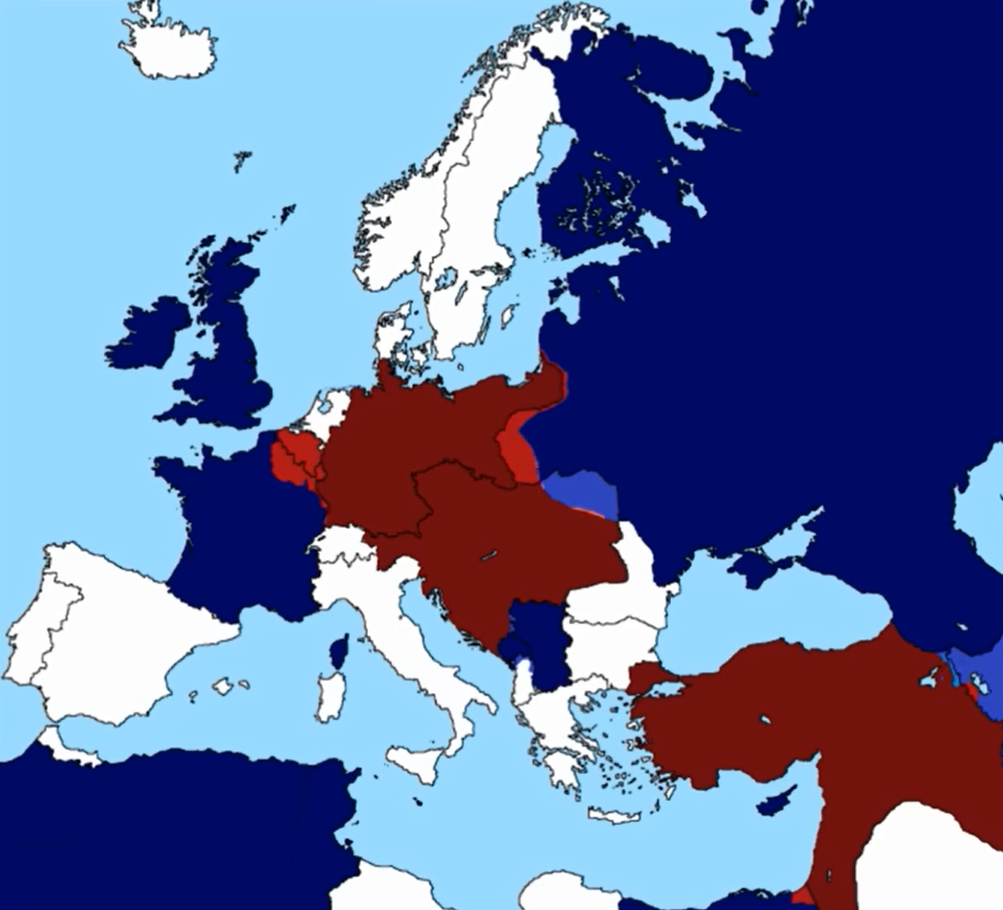
Fig. 6. A map of Europe showing Allied Powers in dark blue, Allied occupations in blue, Allied gains in light blue, Central Powers in maroon, Central occupations in burgundy, Central puppet states in red, and Central gains in pink; screenshot from EmperorTigerstar, "World War I: Every Day," YouTube, 1:06.
February 21, 1916
The Battle of Verdun begins in France. Over 10 months, French and German forces suffer over 700,000 casualties. Entire villages are wiped out. Today, millions of unexploded shells remain in the soil.
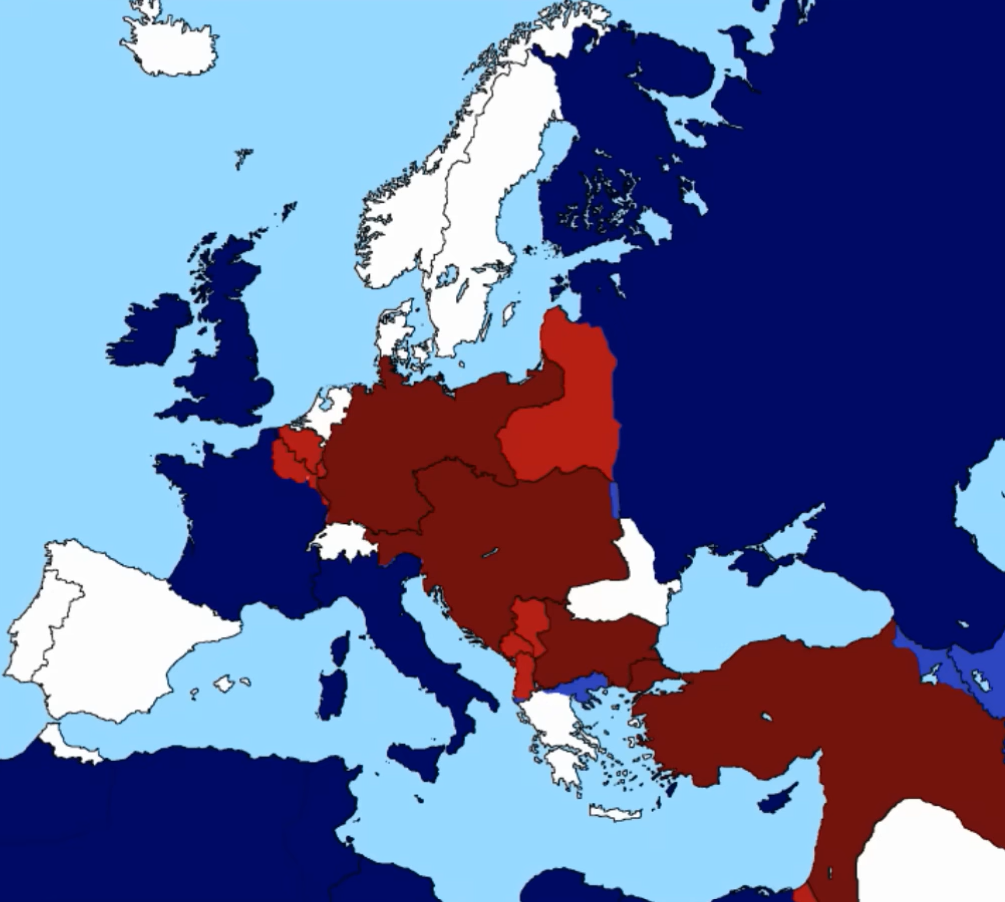
Fig. 7. A map of Europe showing Allied Powers in dark blue, Allied occupations in blue, Allied gains in light blue, Central Powers in maroon, Central occupations in burgundy, Central puppet states in red, and Central gains in pink; screenshot from EmperorTigerstar, "World War I: Every Day," YouTube, 2:04.
May 31, 1916
The British and German fleets clash 60 miles off Jutland, Denmark, in the biggest naval battle of World War I. Despite a fierce arms race leading up to the war, the battle between the world's two largest sea powers ends with no clear victor.
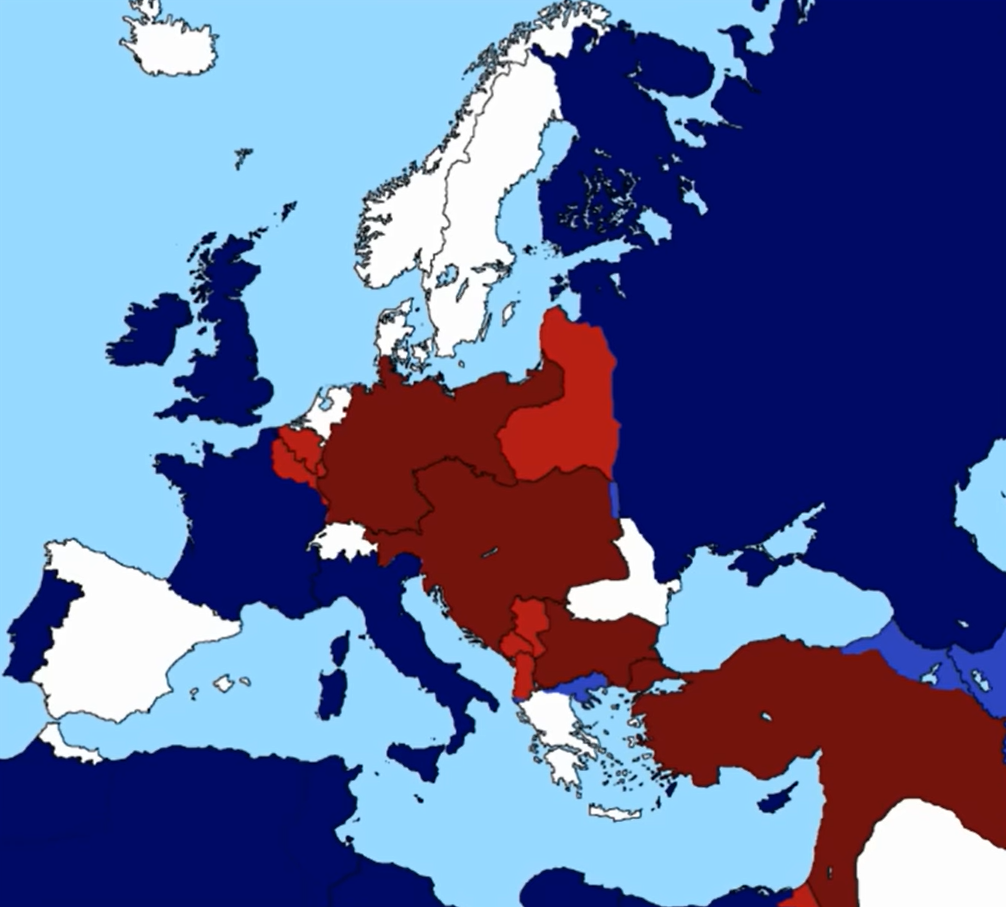
Fig. 8. A map of Europe showing Allied Powers in dark blue, Allied occupations in blue, Allied gains in light blue, Central Powers in maroon, Central occupations in burgundy, Central puppet states in red, and Central gains in pink; screenshot from EmperorTigerstar, "World War I: Every Day," YouTube, 2:24.
July 1, 1916
The First Battle of the Somme begins. The British offensive achieves its goal to draw German forces from Verdun, but at a devastating cost. Nearly 20,000 British soldiers die on the first day alone, marking the bloodiest day in British army history. The campaign ends four and a half months later with over 1 million total casualties.
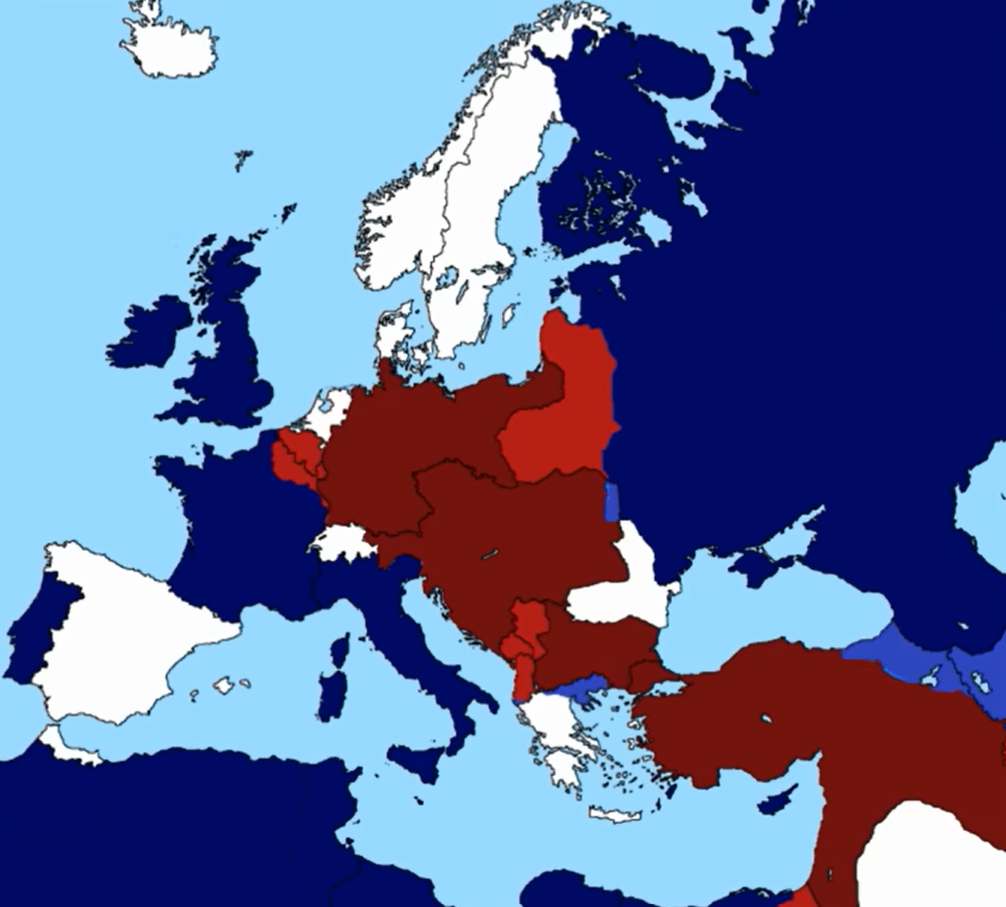
Fig. 9. A map of Europe showing Allied Powers in dark blue, Allied occupations in blue, Allied gains in light blue, Central Powers in maroon, Central occupations in burgundy, Central puppet states in red, and Central gains in pink; screenshot from EmperorTigerstar, "World War I: Every Day," YouTube, 2:30.
March 15, 1917
Czar Nicholas II abdicates after a week of riots in St. Petersburg. This historic moment ends the Romanov dynasty and sparks the Russian Revolution, leading directly to Vladimir Lenin and the Bolsheviks taking power.
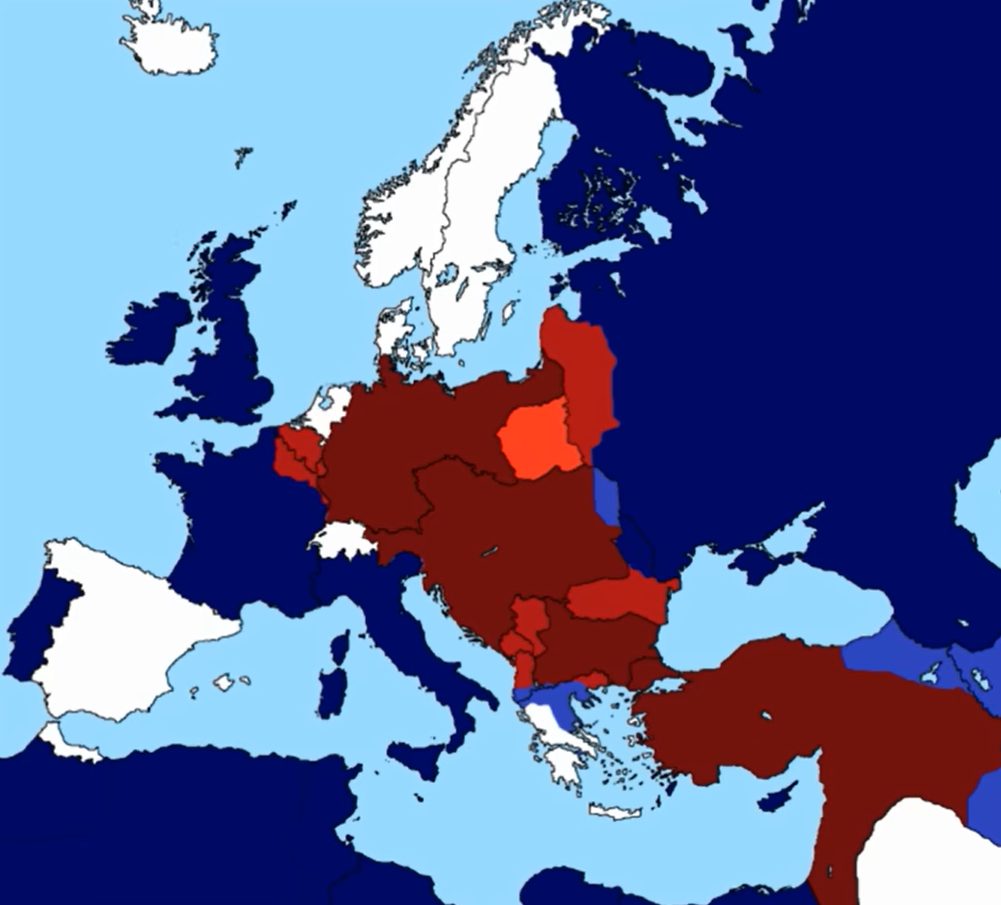
Fig. 10. A map of Europe showing Allied Powers in dark blue, Allied occupations in blue, Allied gains in light blue, Central Powers in maroon, Central occupations in burgundy, Central puppet states in red, and Central gains in pink; screenshot from EmperorTigerstar, "World War I: Every Day," YouTube, 3:22.
April 6, 1917
The United States abandons neutrality and declares war on Germany. President Woodrow Wilson cites unrestricted submarine warfare and the Zimmermann Telegram in his address to Congress four days prior.
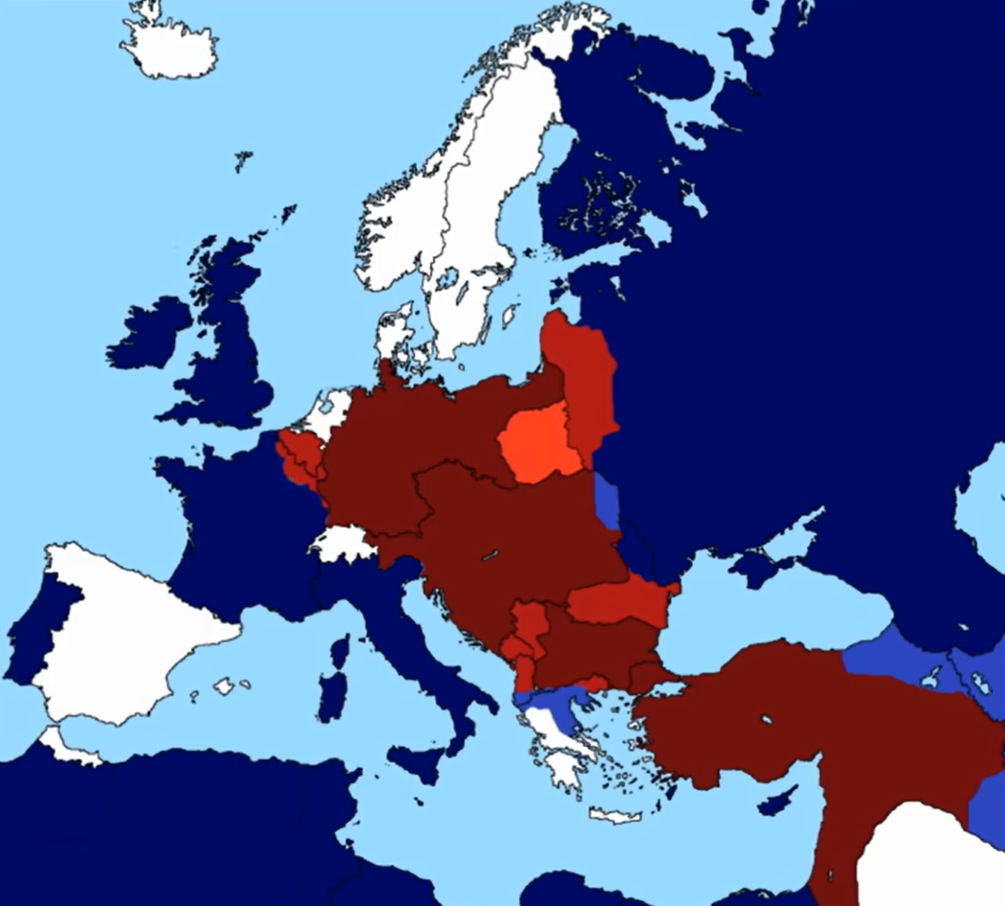
Fig. 11. A map of Europe showing Allied Powers in dark blue, Allied occupations in blue, Allied gains in light blue, Central Powers in maroon, Central occupations in burgundy, Central puppet states in red, and Central gains in pink; screenshot from EmperorTigerstar, "World War I: Every Day," YouTube, 3:26.
March 3, 1918
The Soviet government signs the Treaty of Brest-Litovsk, ending Russia's involvement in World War I. Russia gives up control of Ukraine, Poland, the Baltic states, and Finland.
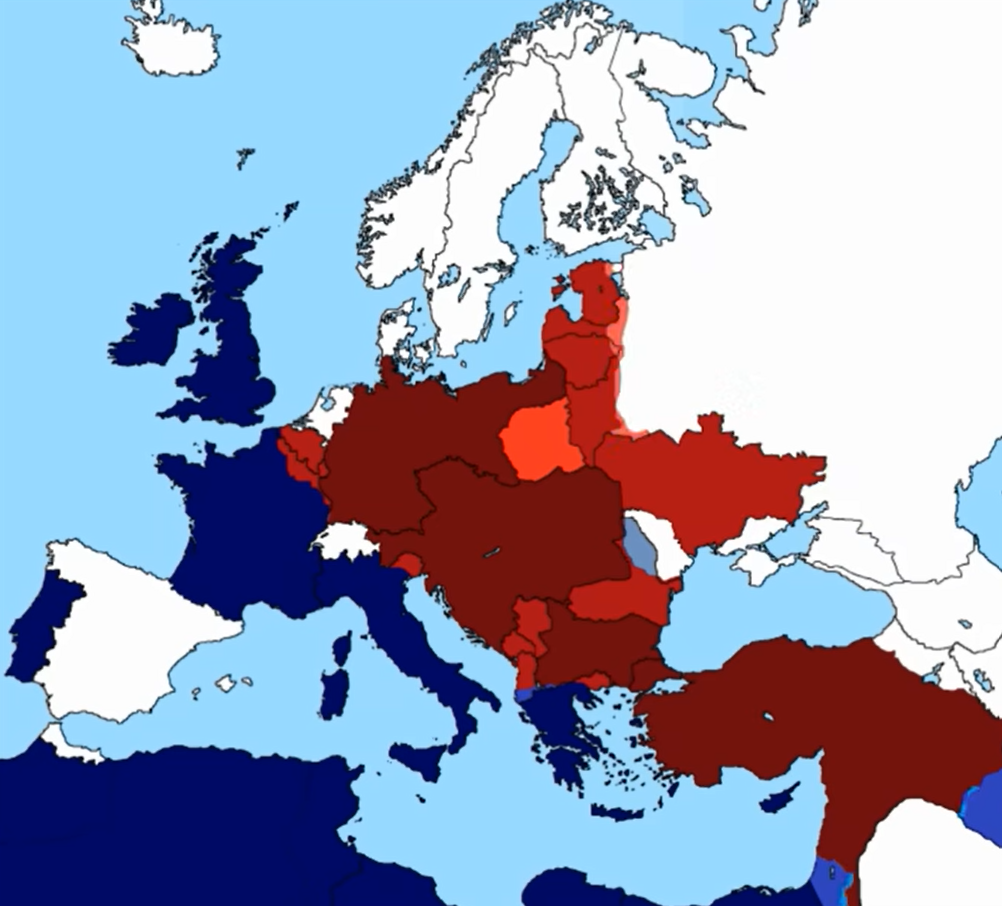
Fig. 12. A map of Europe showing Allied Powers in dark blue, Allied occupations in blue, Allied gains in light blue, Central Powers in maroon, Central occupations in burgundy, Central puppet states in red, and Central gains in pink; screenshot from EmperorTigerstar, "World War I: Every Day," YouTube, 4:32.
November 11, 1918
Germany and the Allies sign an armistice based on Wilson’s Fourteen Points. General Erich Ludendorff invents the false "stabbed in the back" myth, blaming politicians for the loss and fueling the rise of Adolf Hitler to power in 1933.
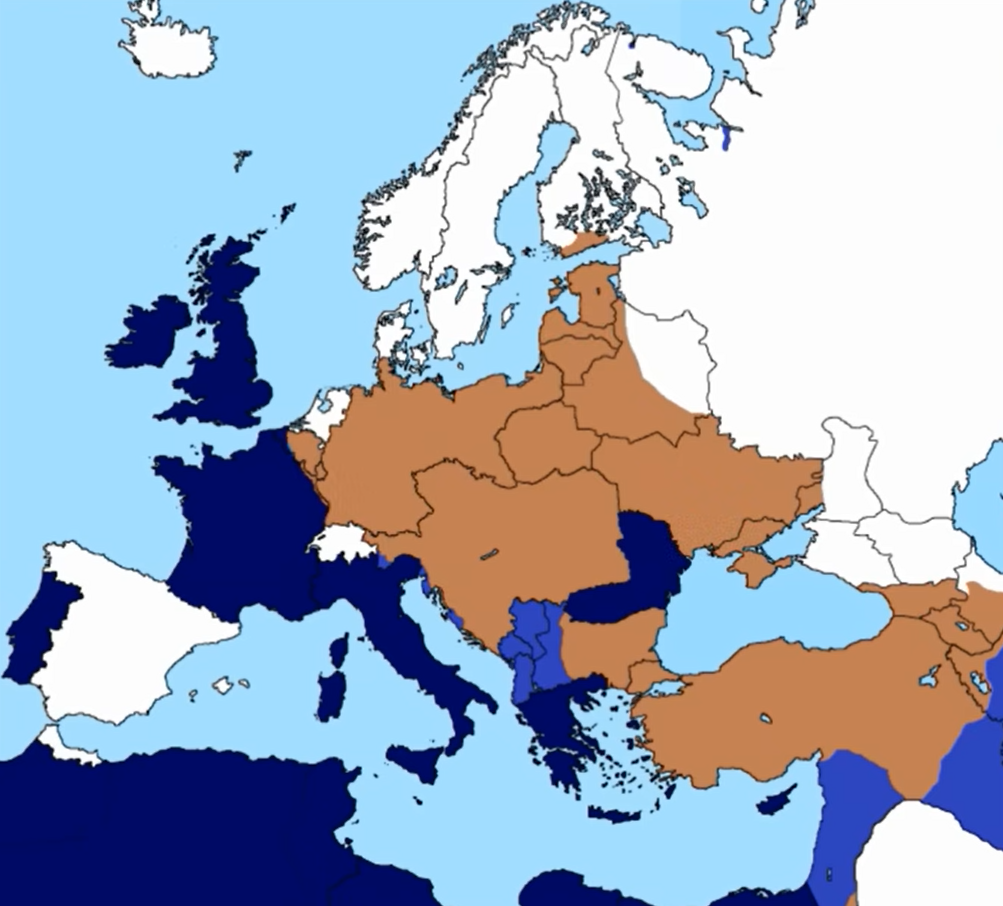
Fig. 13. A map of Europe showing Allied Powers in dark blue, Allied occupations in blue, Allied gains in light blue, and surrendered Central Powers in brown; screenshot from EmperorTigerstar, "World War I: Every Day," YouTube, 5:24.
Bibliography
Ray, Michael. "Timeline of World War I." Encyclopedia Britannica. August 8, 2025. https://www.britannica.com/list/timeline-of-world-war-i.