The Vietnam War
May 1, 1959
North Vietnam begins building the Ho Chi Minh Trail, a secret network of jungle paths, roads, and supply routes through Laos and Cambodia to move fighters and weapons into South Vietnam.
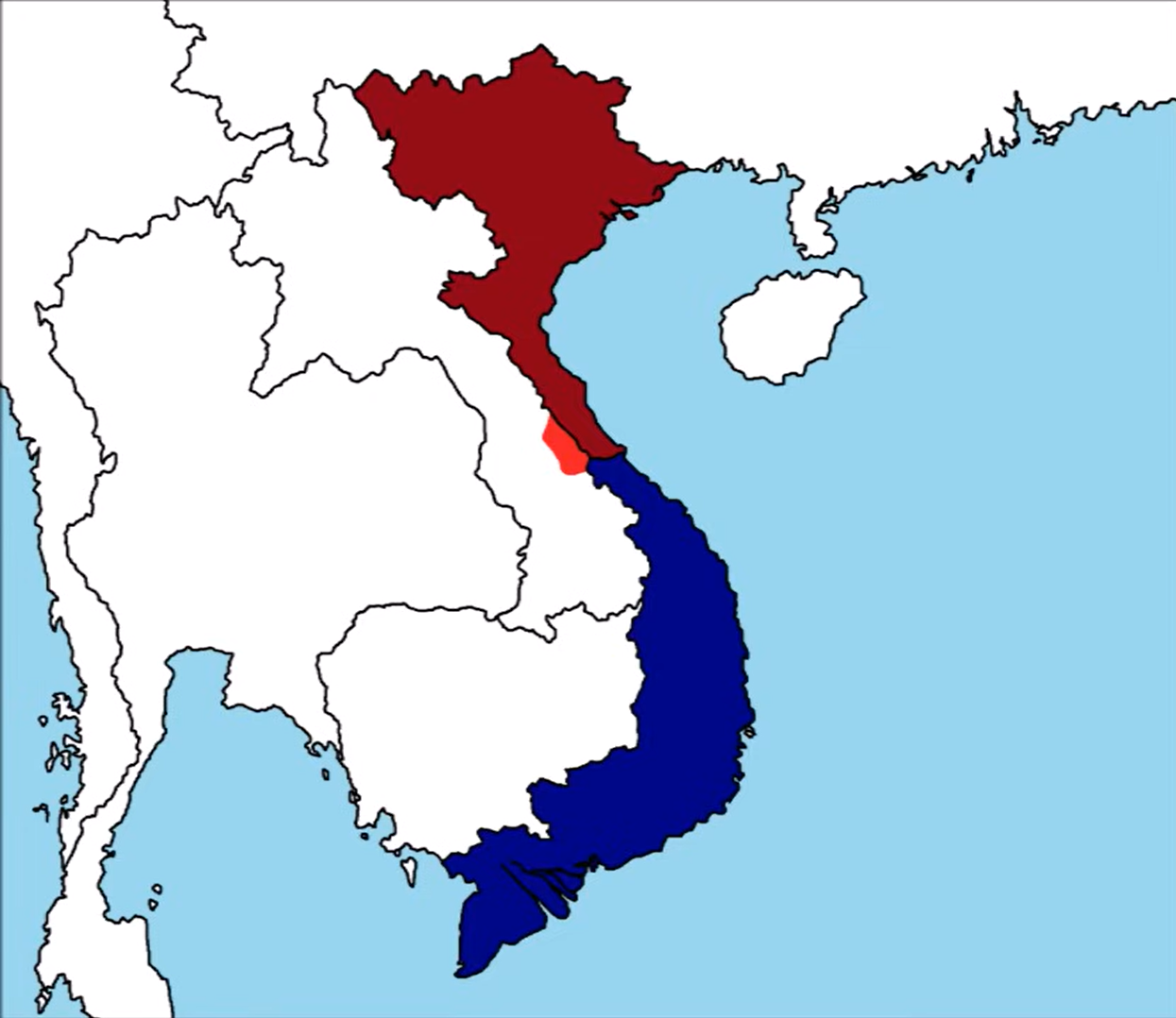
Fig. 1. A map of Vietnam showing South Vietnam and allies in dark blue, anti-communist occupations in blue, anti-communist gains in light blue, North Vietnam and Viet Cong in maroon, communist occupations in red, and communist gains in pink; screenshot from EmperorTigerstar, "The Vietnam War: Every Fortnight," YouTube, 0:14.
August 5, 1964
Following a disputed second North Vietnamese torpedo boat attack report by commanders on the USS Maddox and USS Turner Joy, Congress passes the Gulf of Tonkin Resolution, giving President Lyndon B. Johnson broad war powers despite doubts from the fleet's commander.
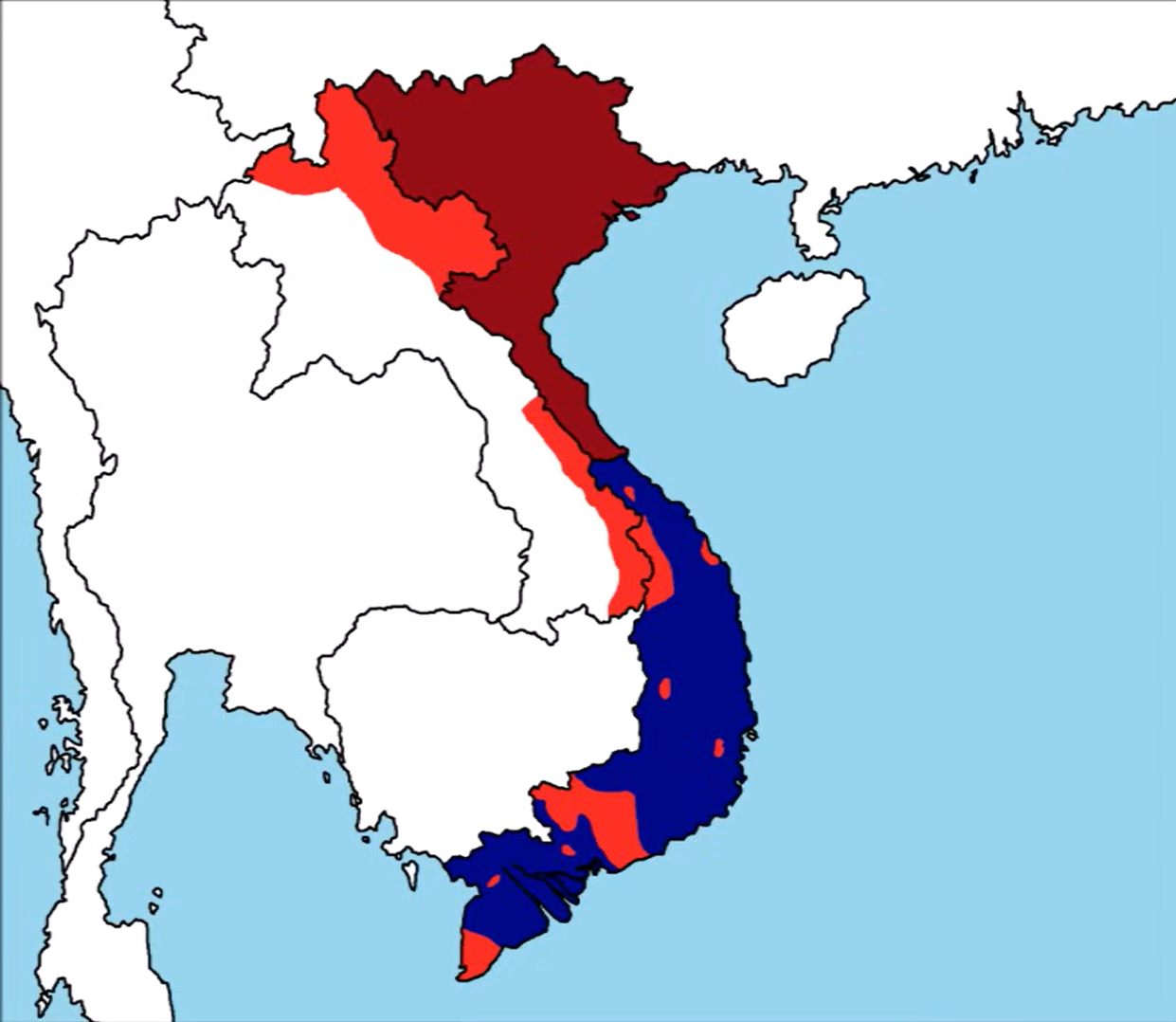
Fig. 2. A map of Vietnam showing South Vietnam and allies in dark blue, anti-communist occupations in blue, anti-communist gains in light blue, North Vietnam and Viet Cong in maroon, communist occupations in red, and communist gains in pink; screenshot from EmperorTigerstar, "The Vietnam War: Every Fortnight," YouTube, 1:23.
January 30-March 28, 1968
Over 85,000 communist troops launch the surprise Tet Offensive across South Vietnam, abandoning guerrilla tactics for conventional assaults. Despite devastating losses for the North, the massive coordinated strike shatters U.S. public confidence and widens the gap between military optimism and reality at home.
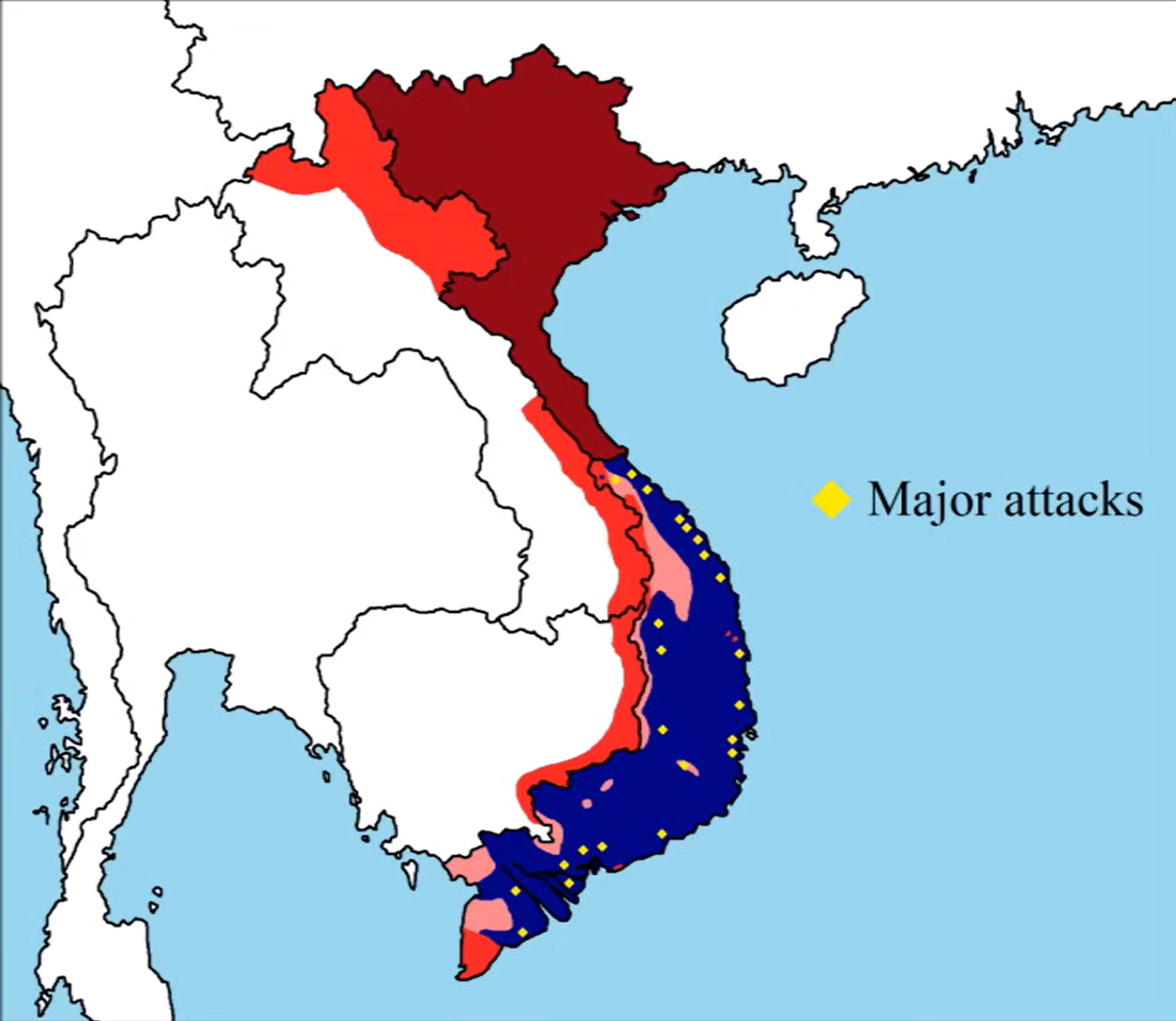
Fig. 3. A map of Vietnam showing South Vietnam and allies in dark blue, anti-communist occupations in blue, anti-communist gains in light blue, North Vietnam and Viet Cong in maroon, communist occupations in red, and communist gains in pink; screenshot from EmperorTigerstar, "The Vietnam War: Every Fortnight," YouTube, 2:09.
March 16, 1968
U.S. Army troops from Charlie Company kill up to 500 unarmed villagers in My Lai, Vietnam. Despite a military cover-up, the massacre sparks public outrage.
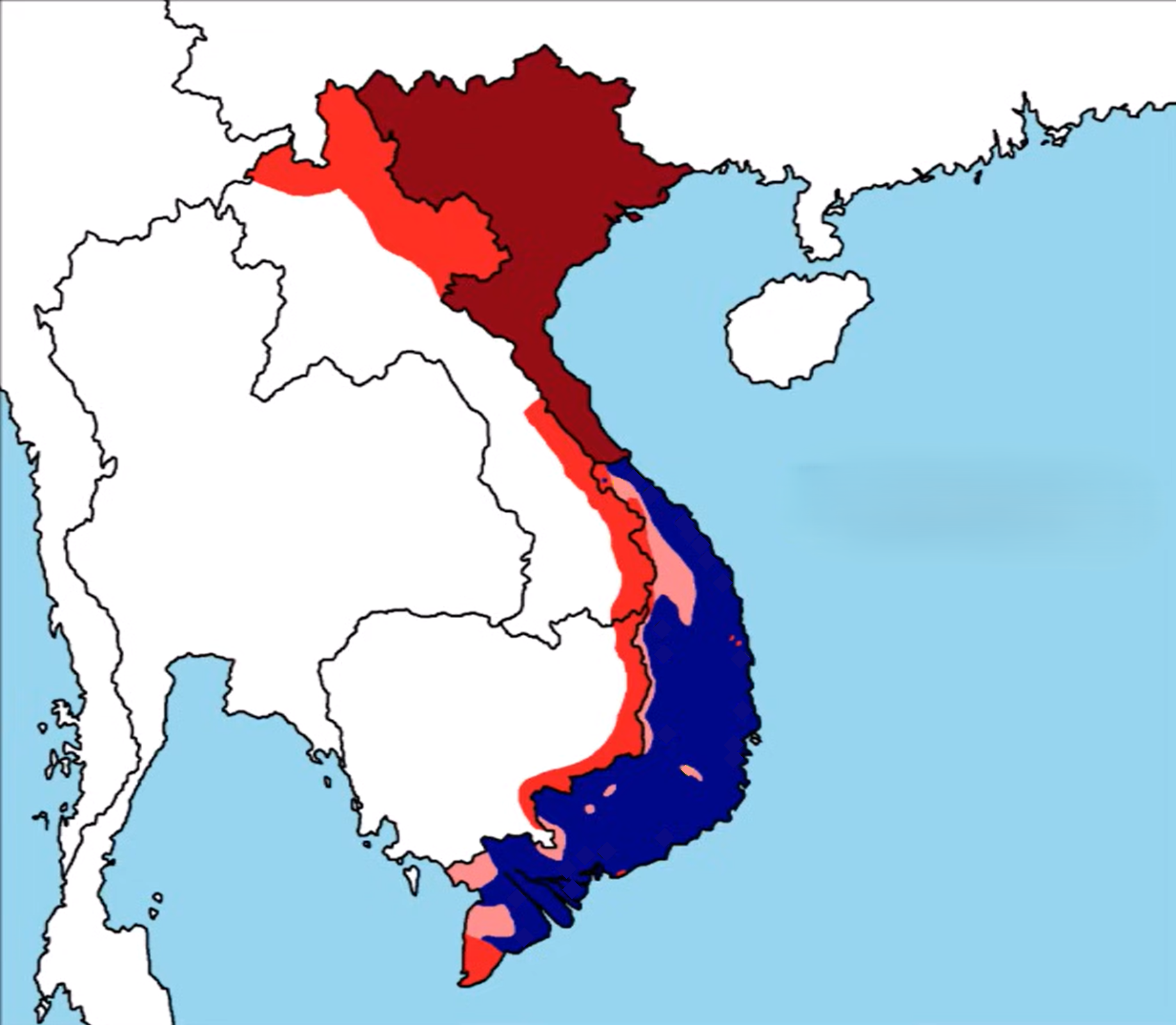
Fig. 4. A map of Vietnam showing South Vietnam and allies in dark blue, anti-communist occupations in blue, anti-communist gains in light blue, North Vietnam and Viet Cong in maroon, communist occupations in red, and communist gains in pink; screenshot from EmperorTigerstar, "The Vietnam War: Every Fortnight," YouTube, 2:09.
January 27, 1973
The Paris Peace Accords are signed. Representatives from the U.S., North Vietnam, South Vietnam, and the Viet Cong conclude a cease-fire, mandate a 60-day U.S. troop withdrawal, and leave the 17th parallel as a temporary dividing line.
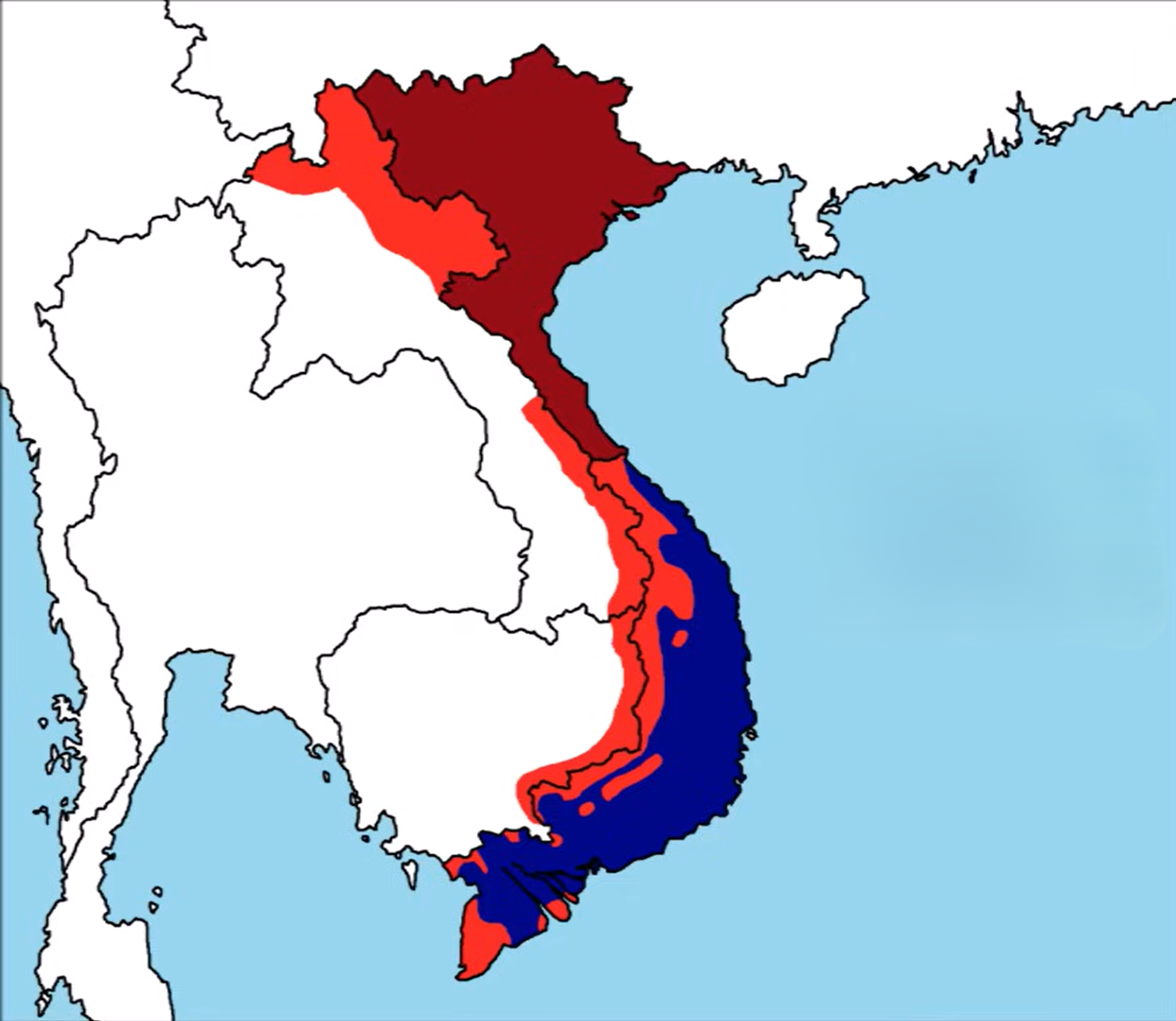
Fig. 5. A map of Vietnam showing South Vietnam and allies in dark blue, anti-communist occupations in blue, anti-communist gains in light blue, North Vietnam and Viet Cong in maroon, communist occupations in red, and communist gains in pink; screenshot from EmperorTigerstar, "The Vietnam War: Every Fortnight," YouTube, 3:01.
March 29, 1973
The final U.S. military unit leaves Vietnam. The decade-long conflict leaves a devastating toll, including 58,000 U.S. deaths, over 1.2 million military casualties among Vietnamese forces, and up to 2 million civilian deaths.
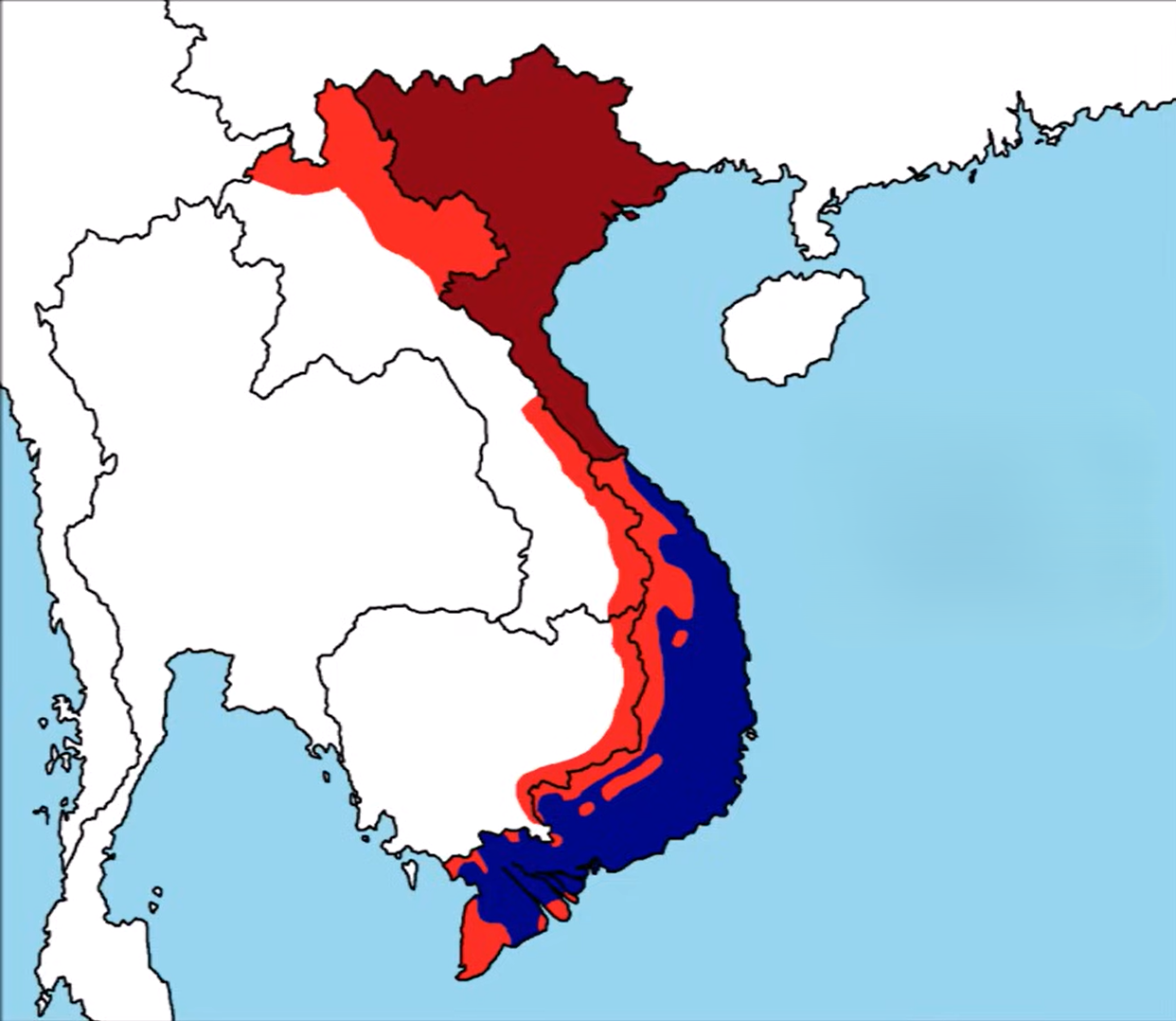
Fig. 6. A map of Vietnam showing South Vietnam and allies in dark blue, anti-communist occupations in blue, anti-communist gains in light blue, North Vietnam and Viet Cong in maroon, communist occupations in red, and communist gains in pink; screenshot from EmperorTigerstar, "The Vietnam War: Every Fortnight," YouTube, 3:01.
April 30, 1975
North Vietnamese forces capture downtown Saigon, and the South Vietnamese government surrenders unconditionally. This historic moment ends the Vietnam War and unites the country under communist rule.
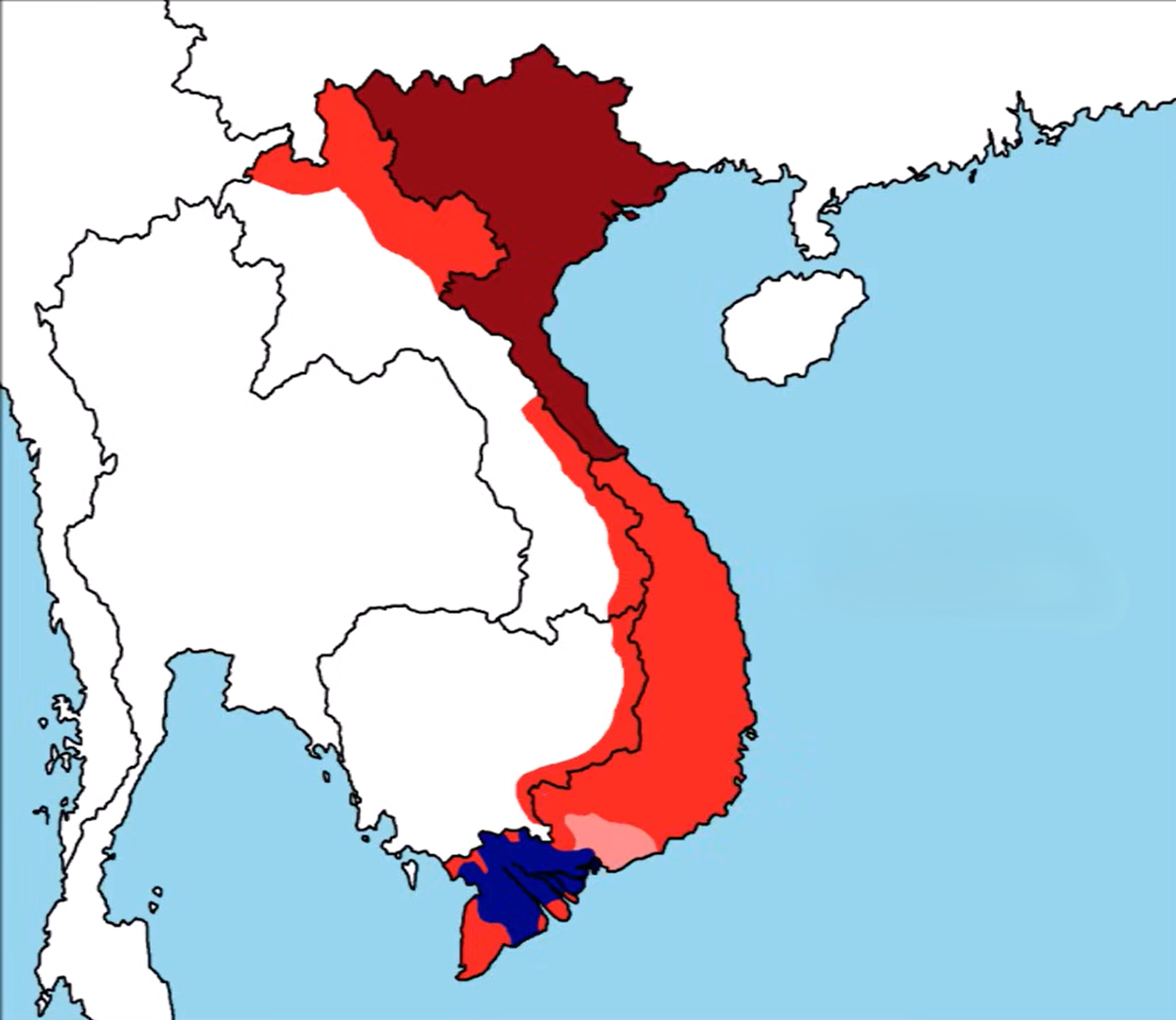
Fig. 7. A map of Vietnam showing South Vietnam and allies in dark blue, anti-communist occupations in blue, anti-communist gains in light blue, North Vietnam and Viet Cong in maroon, communist occupations in red, and communist gains in pink; screenshot from EmperorTigerstar, "The Vietnam War: Every Fortnight," YouTube, 3:17.
July 2, 1976
Vietnam officially reunifies as the Socialist Republic of Vietnam on July 2, 1976. The government renames the former southern capital, Saigon, as Ho Chi Minh City, marking a major turning point in the nation's modern history.
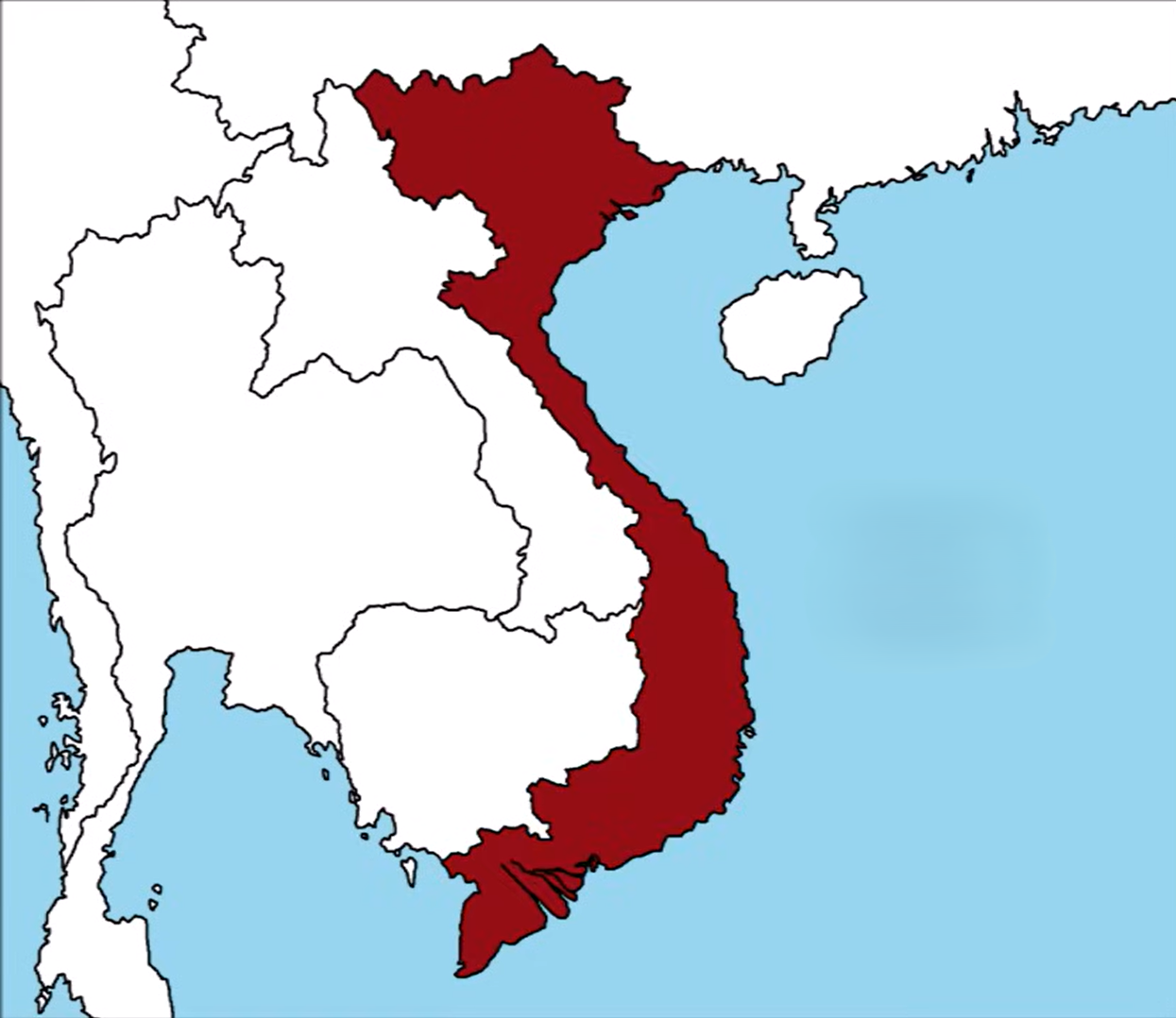
Fig. 8. A map of Vietnam in maroon; screenshot from EmperorTigerstar, "The Vietnam War: Every Fortnight," YouTube, 3:22.
Bibliography
Ray, Michael. "Vietnam War Timeline." Encyclopedia Britannica. January 21, 2026. https://www.britannica.com/list/vietnam-war-timeline.