World War II
September 1, 1939
Germany invades Poland, starting World War II. Just two days later, Britain, France, Australia, and New Zealand formally declare war on Germany.
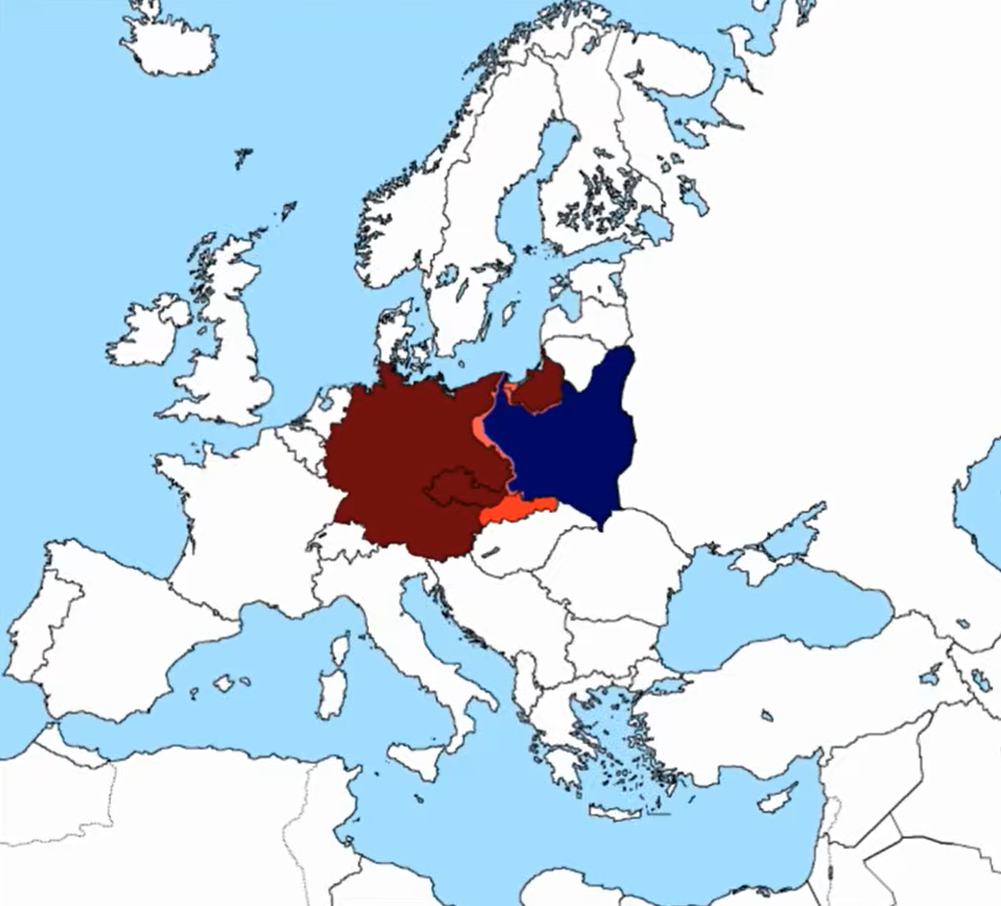
Fig. 1. A map of Europe showing Allied Powers and occupations in blue, Allied gains in light blue, Axis Powers in maroon, Axis occupations in burgundy, Axis puppet states in red, and Axis gains in pink; screenshot from EmperorTigerstar, "World War II in Europe: Every Day," YouTube, 0:15.
September 17, 1939
The Soviet Union invades eastern Poland, fulfilling the secret terms of the Molotov-Ribbentrop Pact.
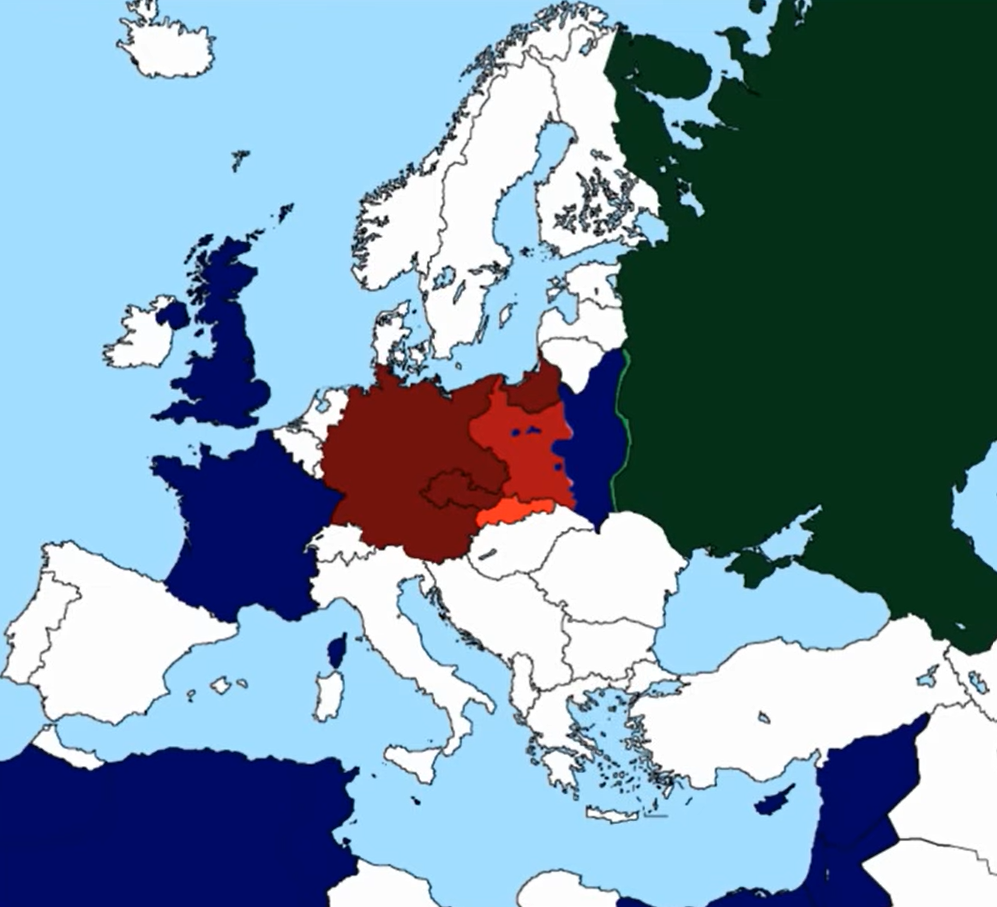
Fig. 2. A map of Europe showing Allied Powers and occupations in blue, Allied gains in light blue, Axis Powers in maroon, Axis occupations in burgundy, Axis puppet states in red, Axis gains in pink, the Soviet Union in dark green, Soviet occupations in green, and Soviet gains in light green; screenshot from EmperorTigerstar, "World War II in Europe: Every Day," YouTube, 0:18.
May 26-June 4, 1940
Operation Dynamo evacuates over 338,000 Allied troops, including 198,000 British and 140,000 French and Belgian soldiers, from the beaches of Dunkirk, France, saving a vital army from capture.
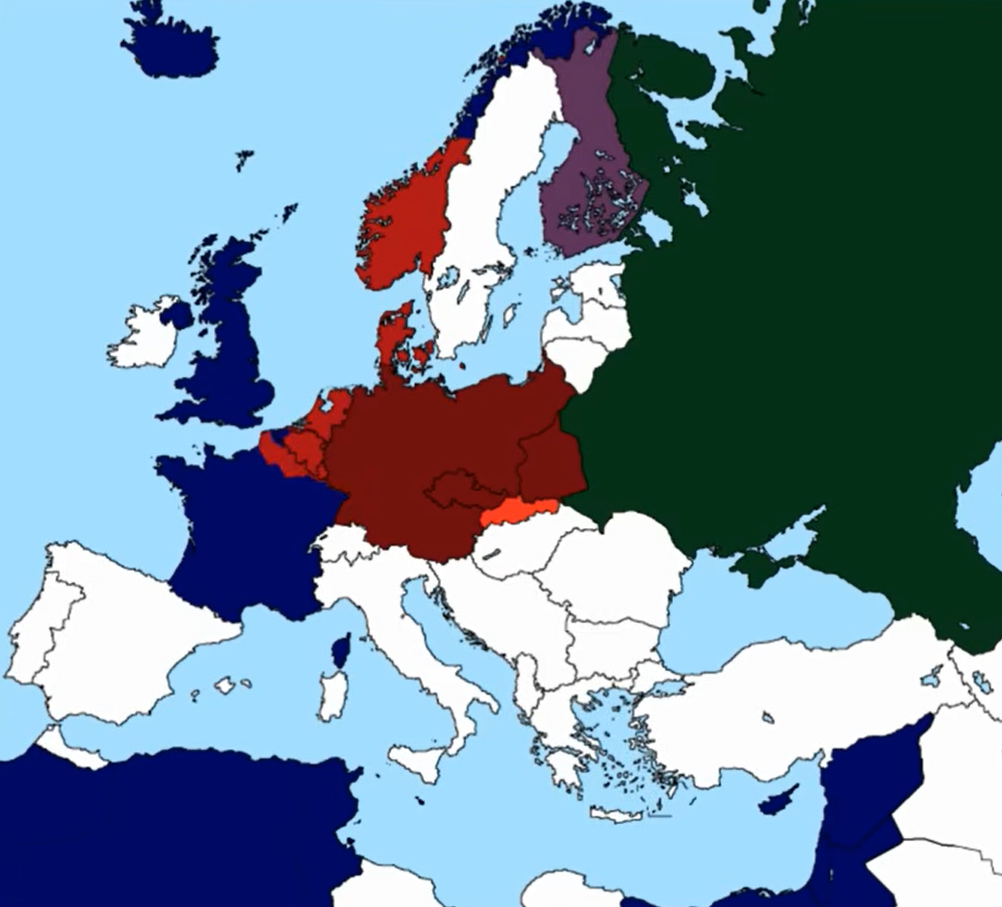
Fig. 3. A map of Europe showing Allied Powers and occupations in blue, Allied gains in light blue, Axis Powers in maroon, Axis occupations in burgundy, Axis puppet states in red, Axis gains in pink, Finland in dark purple, Finnish occupations in purple, Finish gains in light purple, the Soviet Union in dark green, Soviet occupations in green, and Soviet gains in light green; screenshot from EmperorTigerstar, "World War II in Europe: Every Day," YouTube, 1:03.
June 22, 1940
France signs an armistice agreement with Germany, which ends the Battle of France and begins the military occupation of northern and western France by Nazi Germany.
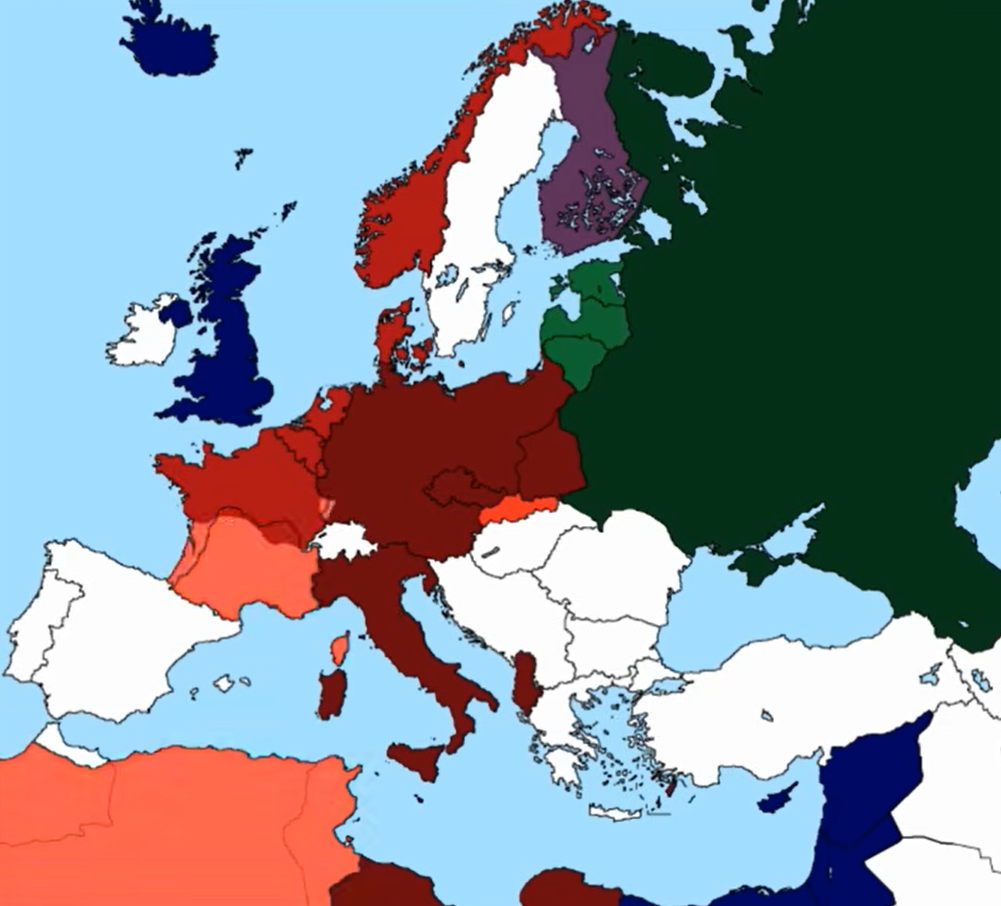
Fig. 4. A map of Europe showing Allied Powers and occupations in blue, Allied gains in light blue, Axis Powers in maroon, Axis occupations in burgundy, Axis puppet states in red, Axis gains in pink, Finland in dark purple, Finnish occupations in purple, Finish gains in light purple, the Soviet Union in dark green, Soviet occupations in green, and Soviet gains in light green; screenshot from EmperorTigerstar, "World War II in Europe: Every Day," YouTube, 1:08.
June 22, 1941
Germany launches Operation Barbarossa, breaking the Molotov-Ribbentrop Pact and invading the Soviet Union. This massive betrayal opens the brutal Eastern Front and changes the course of World War II.
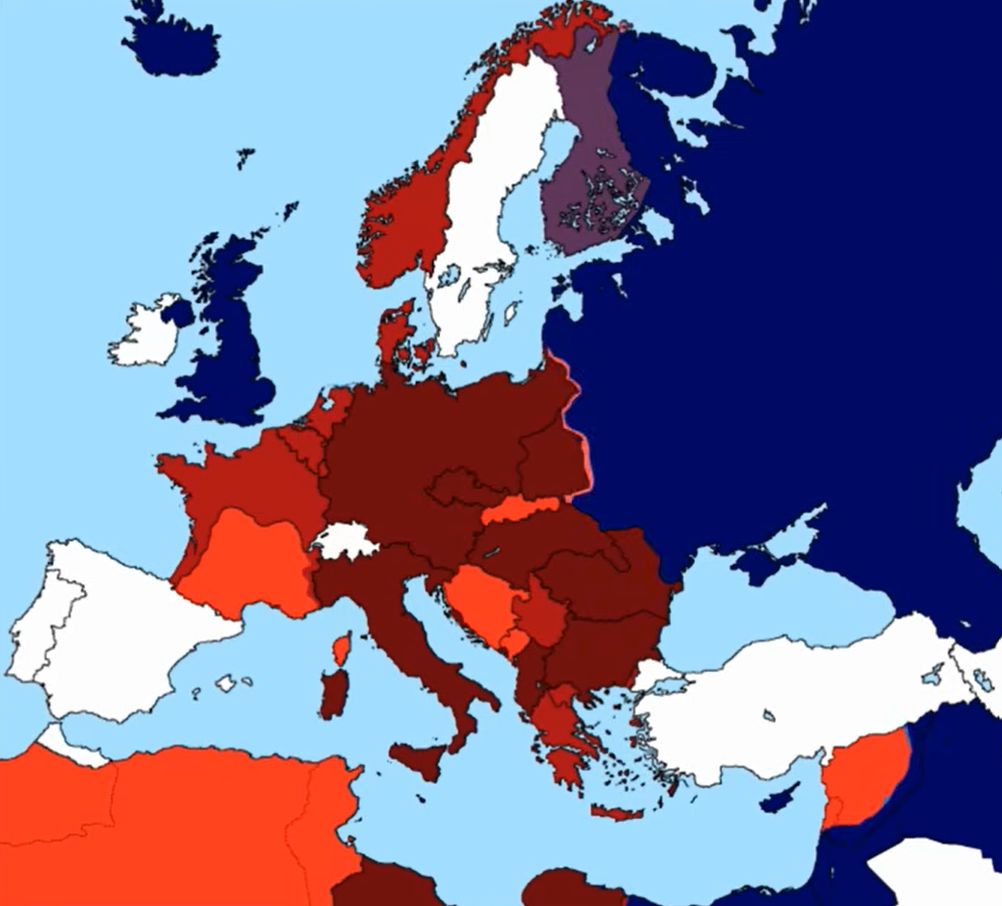
Fig. 5. A map of Europe showing Allied Powers and occupations in blue, Allied gains in light blue, Axis Powers in maroon, Axis occupations in burgundy, Axis puppet states in red, Axis gains in pink, Finland in dark purple, Finnish occupations in purple, and Finish gains in light purple; screenshot from EmperorTigerstar, "World War II in Europe: Every Day," YouTube, 2:13.
December 7, 1941
Japanese forces launch coordinated attacks on Pearl Harbor and Midway. In response, Canada, the Dutch government-in-exile, the United States, and Britain declare war the next day.
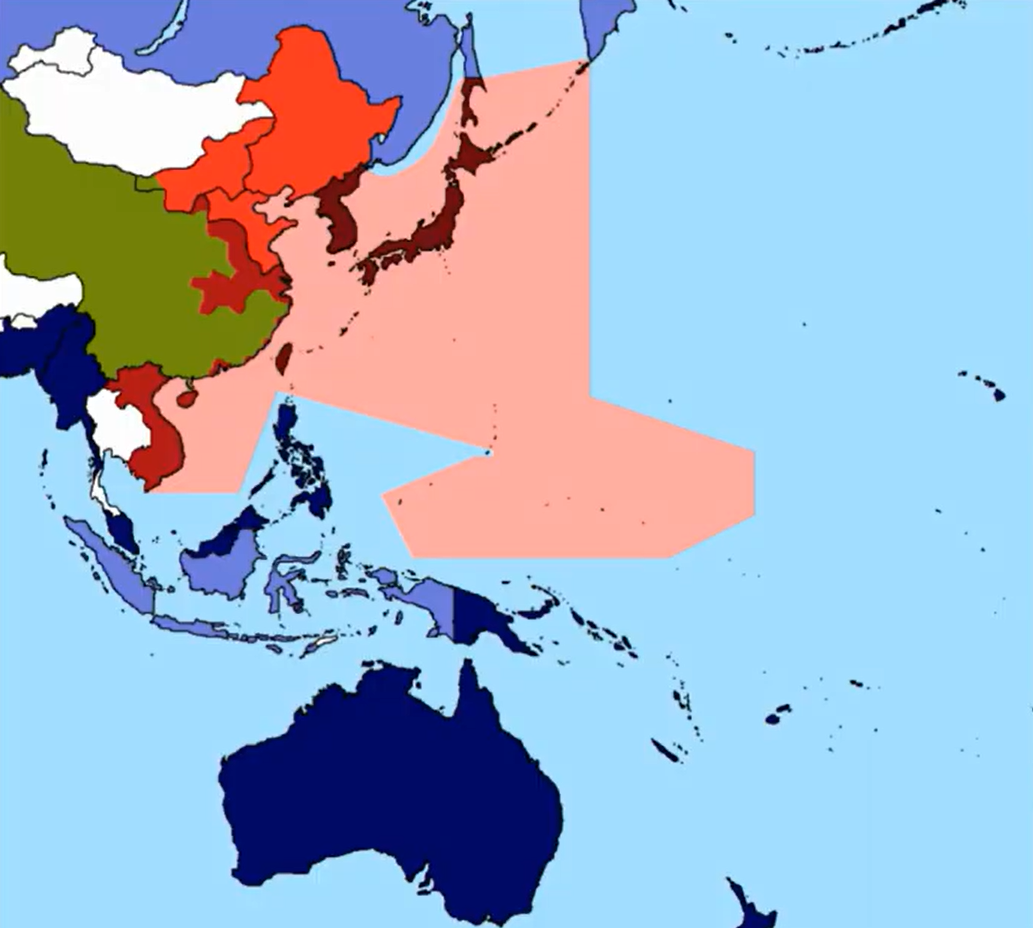
Fig. 6. A map of the Pacific showing Allied Powers and occupations in blue, Allied gains in light blue, Allied Powers not at war with Japan in gray-blue, Axis Powers in maroon, Axis occupations in burgundy, Axis puppet states in red, Axis gains in pink, China in green, and Chinese occupations in light green; screenshot from EmperorTigerstar, "World War II in the Pacific: Every Day," YouTube, 0:11.
April 18, 1942
Lieutenant Colonel James H. Doolittle leads 16 B-25 bombers off the U.S. Navy aircraft carrier USS Hornet for a bold surprise raid on Japan. The attack causes minor physical damage, but it gives a massive boost to Allied morale during World War II.
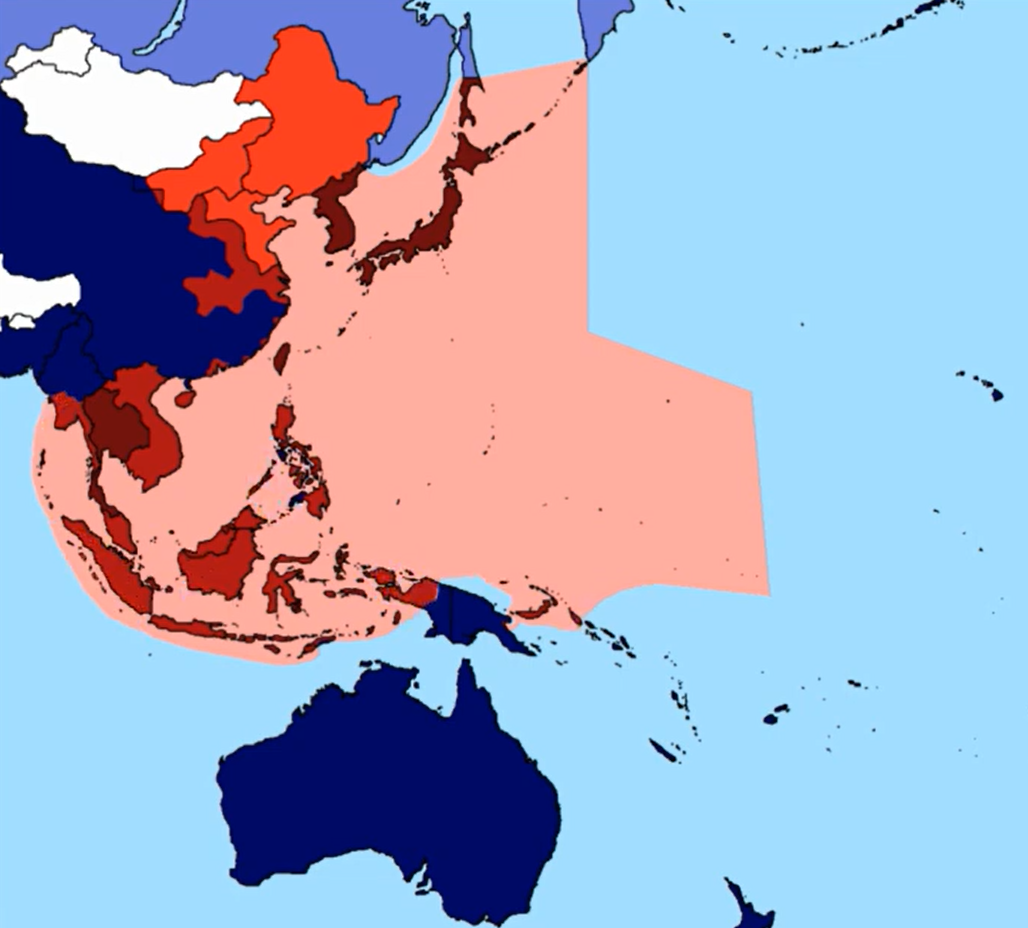
Fig. 7. A map of the Pacific showing Allied Powers and occupations in blue, Allied gains in light blue, Allied Powers not at war with Japan in gray-blue, Axis Powers in maroon, Axis occupations in burgundy, Axis puppet states in red, and Axis gains in pink; screenshot from EmperorTigerstar, "World War II in the Pacific: Every Day," YouTube, 0:36.
June 3-6, 1942
The Battle of Midway marks the turning point of the Pacific War as U.S. forces destroy Japan's main aircraft carriers and elite naval pilots.
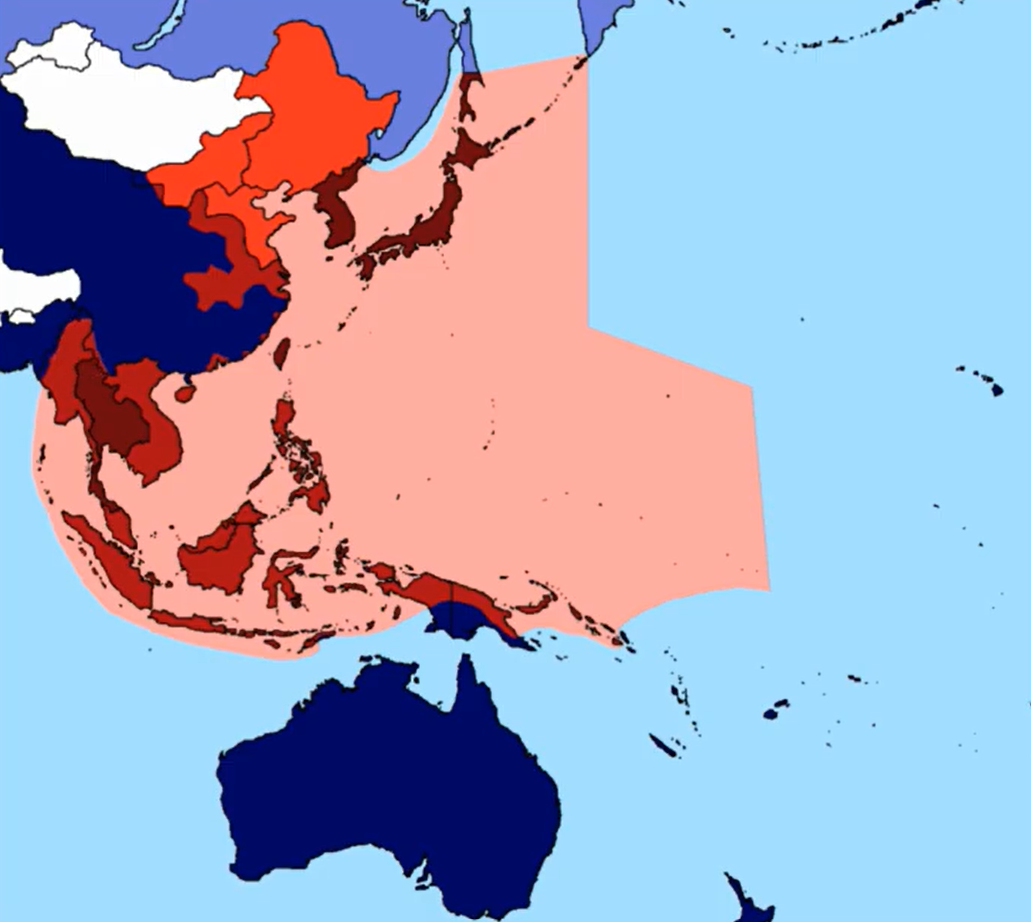
Fig. 8. A map of the Pacific showing Allied Powers and occupations in blue, Allied gains in light blue, Allied Powers not at war with Japan in gray-blue, Axis Powers in maroon, Axis occupations in burgundy, Axis puppet states in red, and Axis gains in pink; screenshot from EmperorTigerstar, "World War II in the Pacific: Every Day," YouTube, 0:44.
February 2, 1943
The Battle of Stalingrad ends in a decisive Soviet victory as the remaining German forces surrender. This brutal clash cost around 2 million total casualties and remains the turning point of World War II.
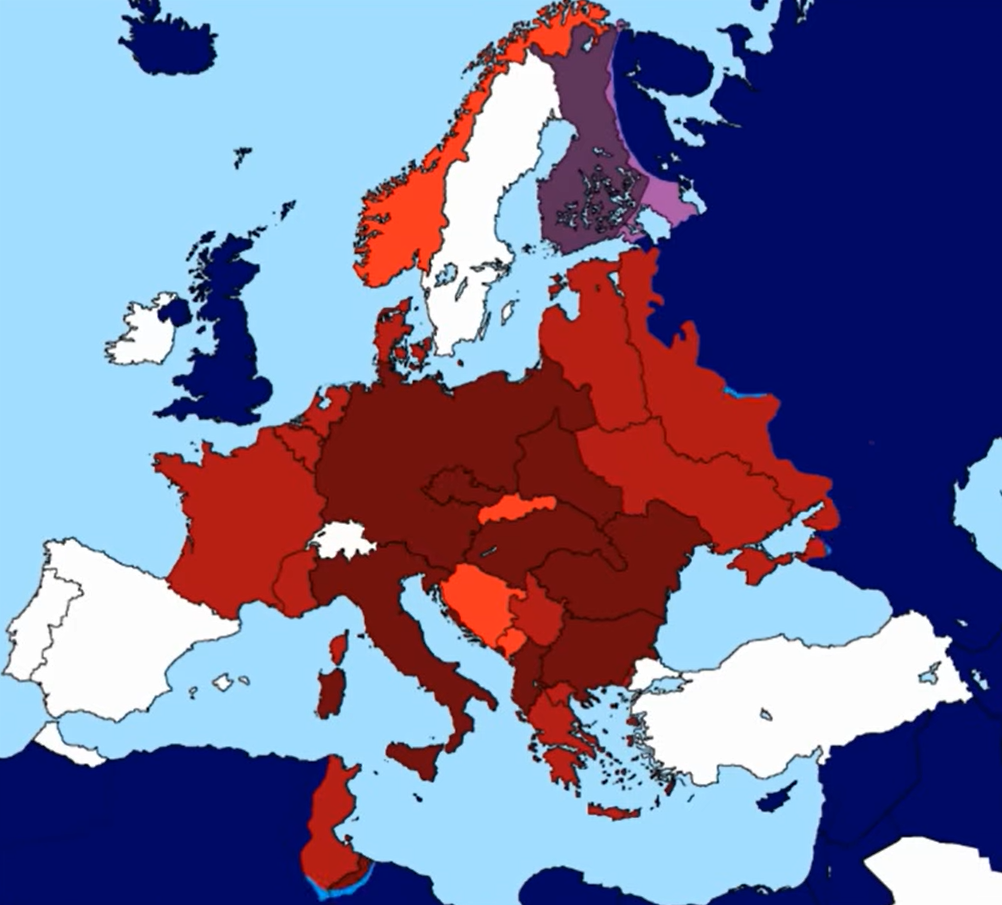
Fig. 9. A map of Europe showing Allied Powers and occupations in blue, Allied gains in light blue, Axis Powers in maroon, Axis occupations in burgundy, Axis puppet states in red, Axis gains in pink, Finland in dark purple, Finnish occupations in purple, and Finish gains in light purple; screenshot from EmperorTigerstar, "World War II in Europe: Every Day," YouTube, 4:00.
July 9-10, 1943
Allied forces launch Operation Husky to invade Sicily, paving the way for the collapse of Italy's fascist regime and the fall of Italian dictator Benito Mussolini.
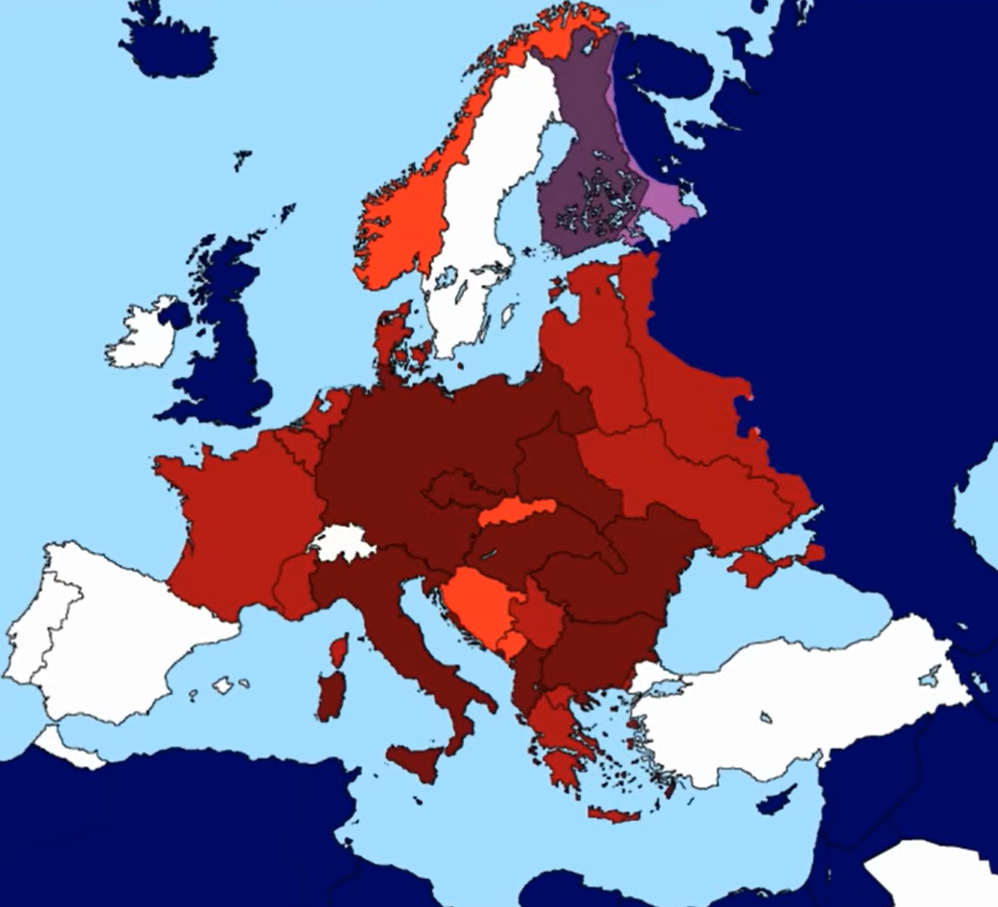
Fig. 10. A map of Europe showing Allied Powers and occupations in blue, Allied gains in light blue, Axis Powers in maroon, Axis occupations in burgundy, Axis puppet states in red, Axis gains in pink, Finland in dark purple, Finnish occupations in purple, and Finish gains in light purple; screenshot from EmperorTigerstar, "World War II in Europe: Every Day," YouTube, 4:28.
September 3, 1943
Allied forces land in southern Italy, and the Italian government surrenders. German troops quickly take over the defense, launching a brutal and costly 20-month campaign of heavy fighting that delays the Allied advance until the final German surrender in Italy in May 1945.
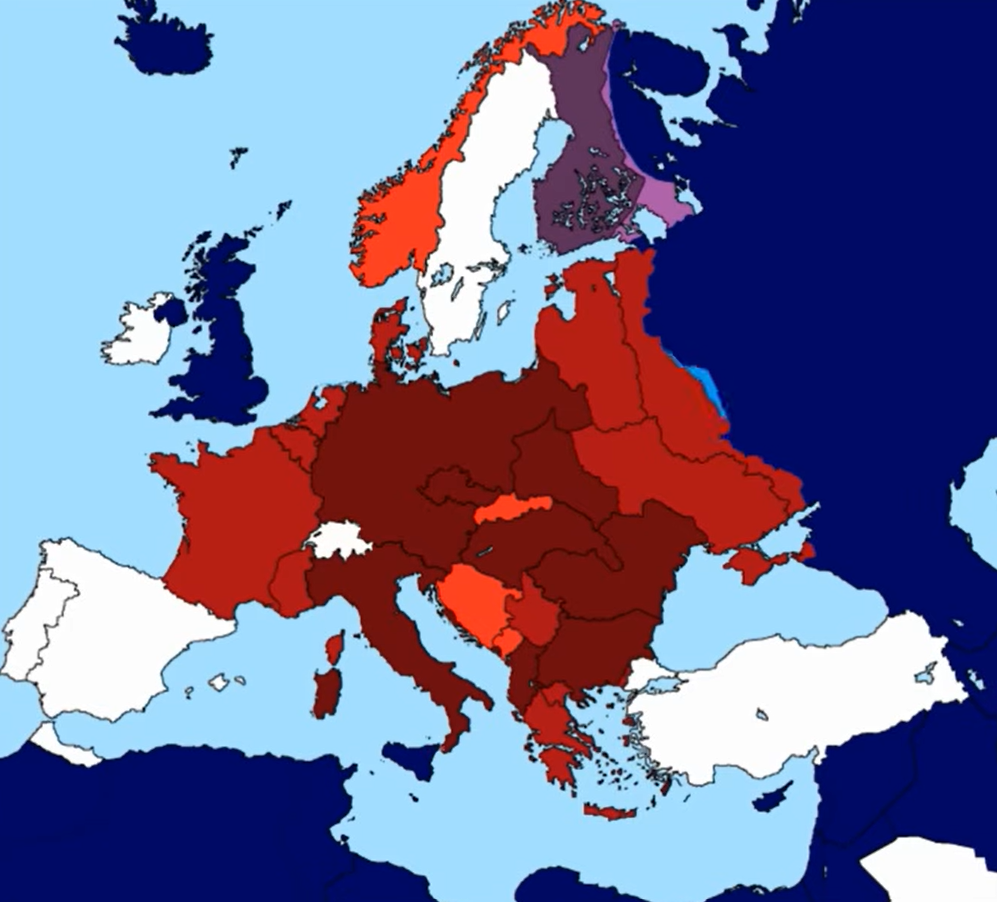
Fig. 11. A map of Europe showing Allied Powers and occupations in blue, Allied gains in light blue, Axis Powers in maroon, Axis occupations in burgundy, Axis puppet states in red, Axis gains in pink, Finland in dark purple, Finnish occupations in purple, and Finish gains in light purple; screenshot from EmperorTigerstar, "World War II in Europe: Every Day," YouTube, 4:38.
November 28, 1943
On November 28, 1943, Roosevelt, Churchill, and Stalin meet at the Tehran Conference in Iran. They make final plans to defeat Nazi Germany.
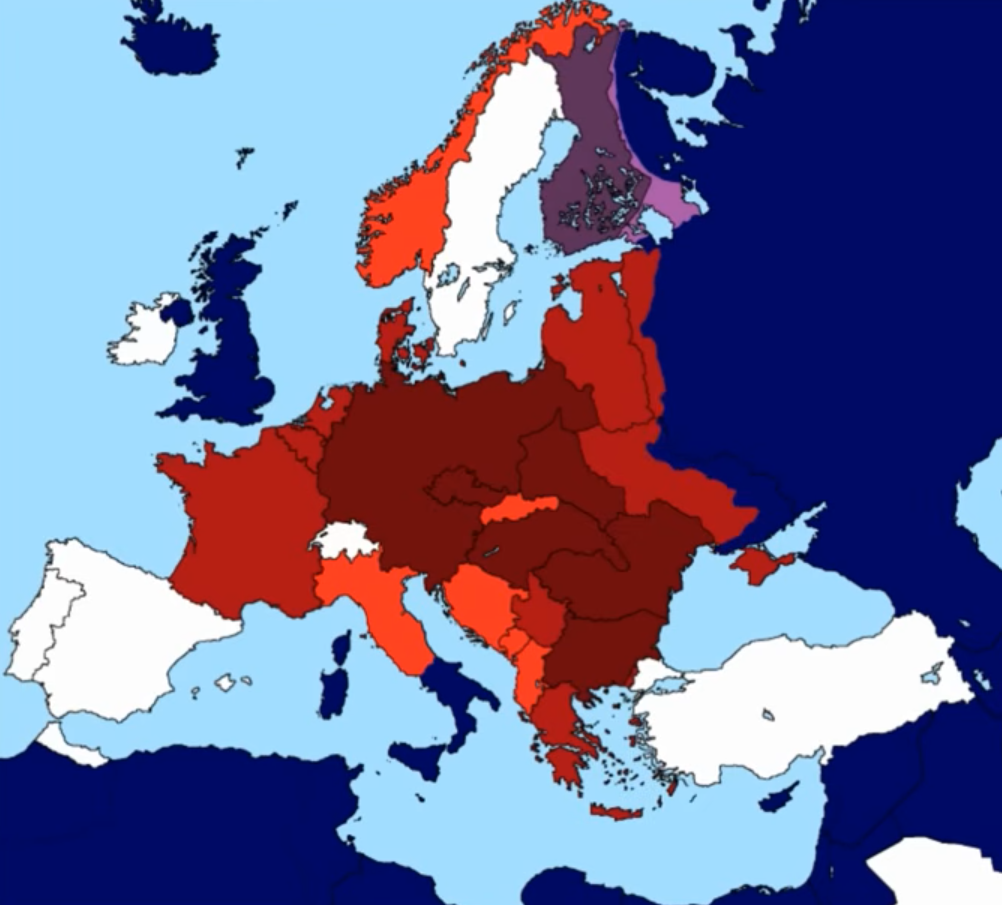
Fig. 12. A map of Europe showing Allied Powers and occupations in blue, Allied gains in light blue, Axis Powers in maroon, Axis occupations in burgundy, Axis puppet states in red, Axis gains in pink, Finland in dark purple, Finnish occupations in purple, and Finish gains in light purple; screenshot from EmperorTigerstar, "World War II in Europe: Every Day," YouTube, 4:53.
June 6, 1944
D-Day begins as 160,000 Allied troops land on the beaches of Normandy, France. This massive sea and air attack breaks through Hitler's defense wall and starts the liberation of Western Europe.
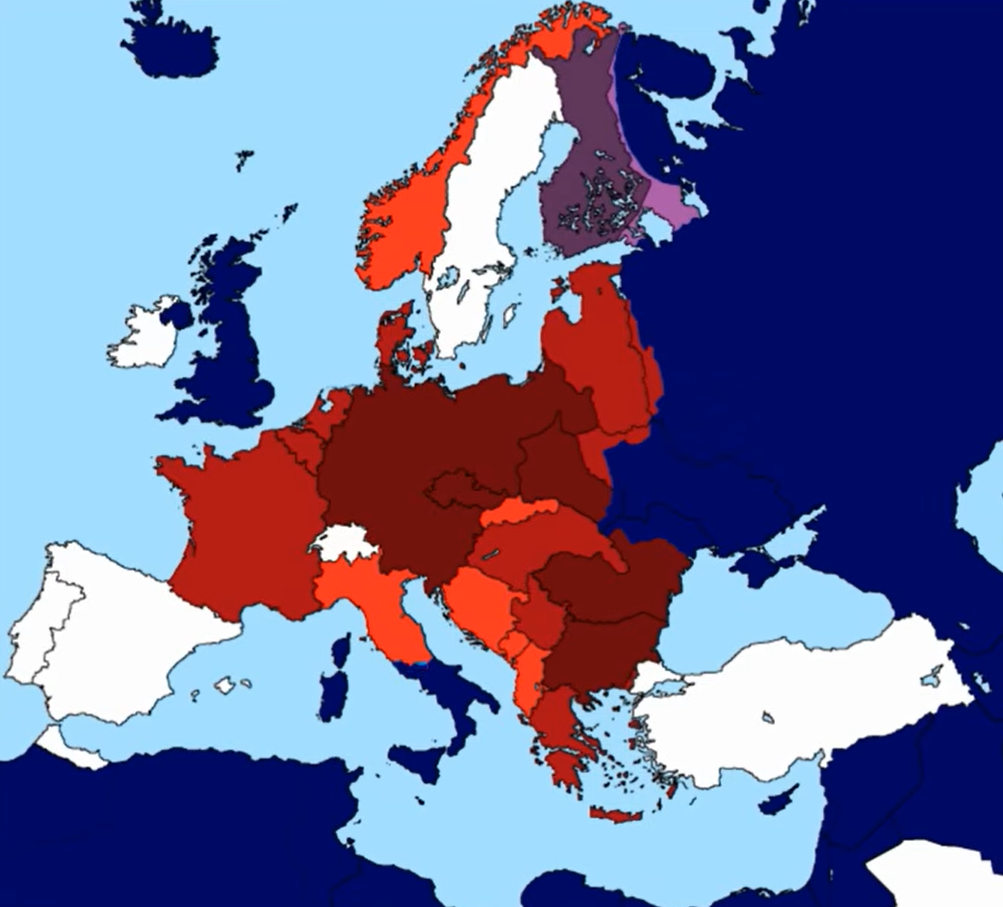
Fig. 13. A map of Europe showing Allied Powers and occupations in blue, Allied gains in light blue, Axis Powers in maroon, Axis occupations in burgundy, Axis puppet states in red, Axis gains in pink, Finland in dark purple, Finnish occupations in purple, and Finish gains in light purple; screenshot from EmperorTigerstar, "World War II in Europe: Every Day," YouTube, 5:28.
December 16, 1944
German forces launch a massive surprise counteroffensive through the Ardennes Forest in Belgium and Luxembourg, sparking the brutal month-long Battle of the Bulge on the Western Front.
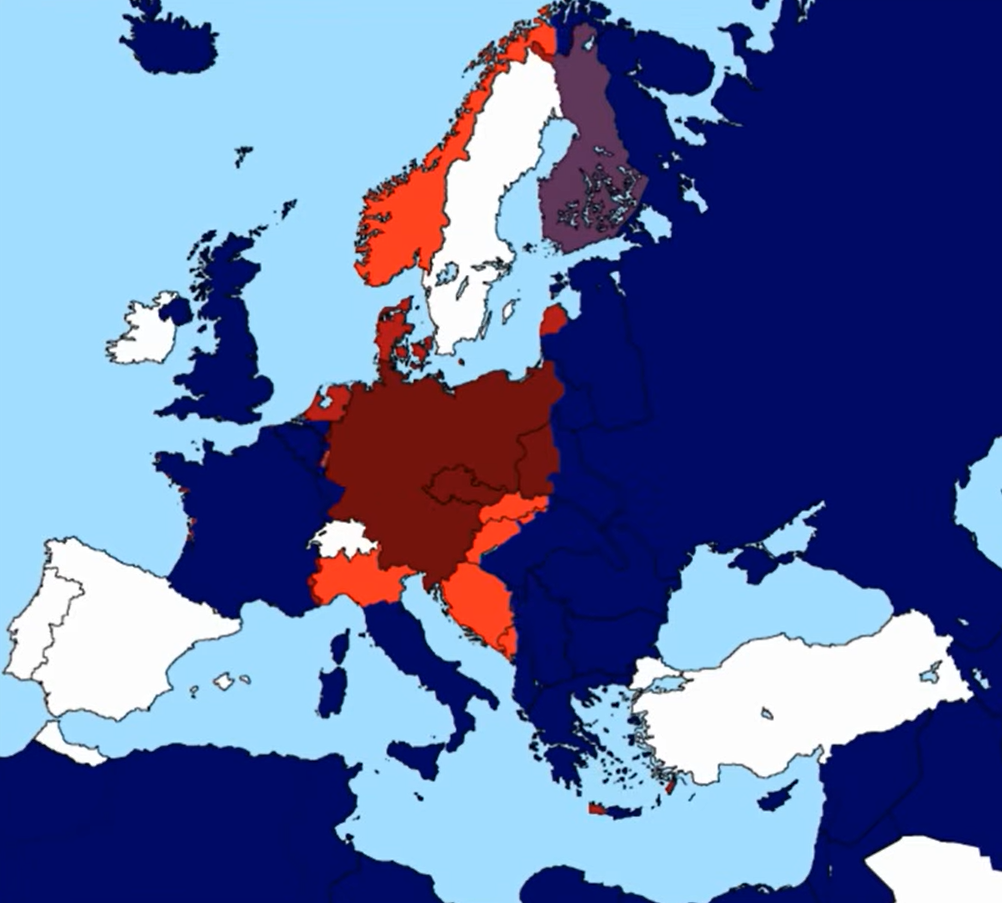
Fig. 14. A map of Europe showing Allied Powers and occupations in blue, Allied gains in light blue, Axis Powers in maroon, Axis occupations in burgundy, Axis puppet states in red, Axis gains in pink, Finland in dark purple, Finnish occupations in purple, and Finish gains in light purple; screenshot from EmperorTigerstar, "World War II in Europe: Every Day," YouTube, 6:02.
April 30, 1945
Adolf Hitler commits suicide in his Berlin bunker as Soviet Red Army troops close in on the city center.
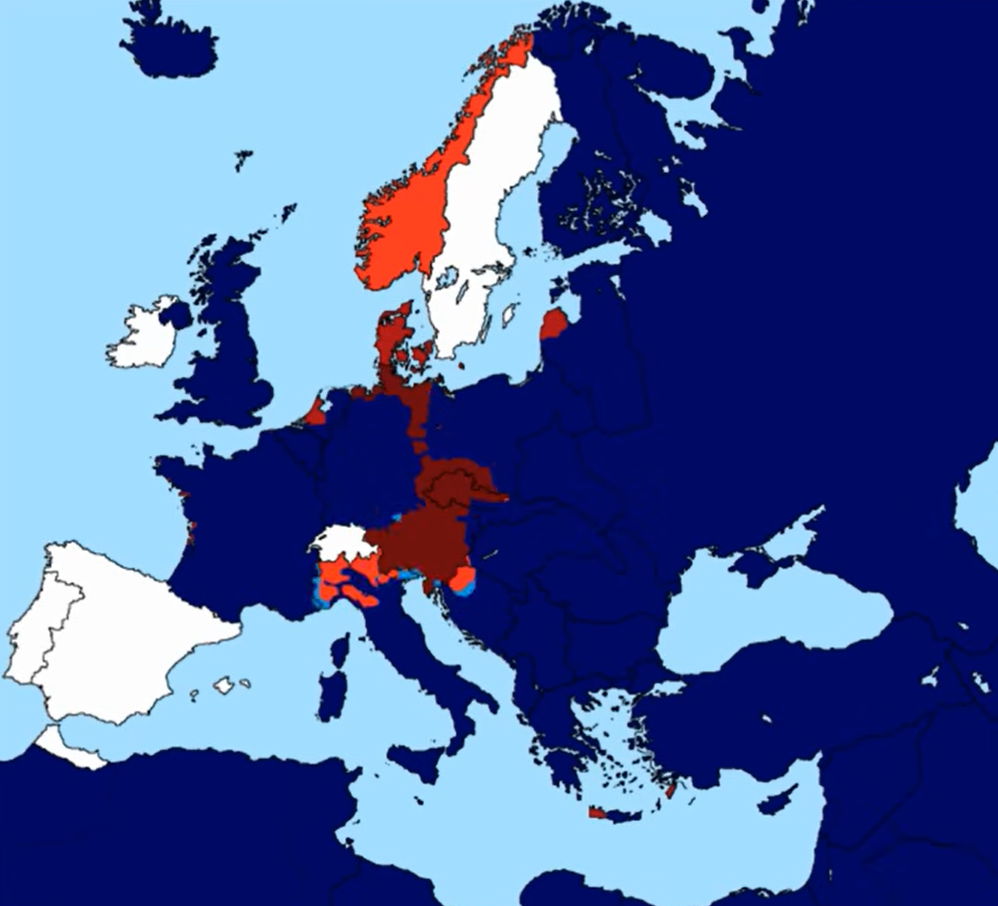
Fig. 15. A map of Europe showing Allied Powers and occupations in blue, Allied gains in light blue, Axis Powers in maroon, Axis occupations in burgundy, Axis puppet states in red, and Axis gains in pink; screenshot from EmperorTigerstar, "World War II in Europe: Every Day," YouTube, 6:27.
May 8, 1945
Allied nations celebrate Victory in Europe (VE) Day, the formal end of World War II in Europe, following Nazi Germany's unconditional surrender.
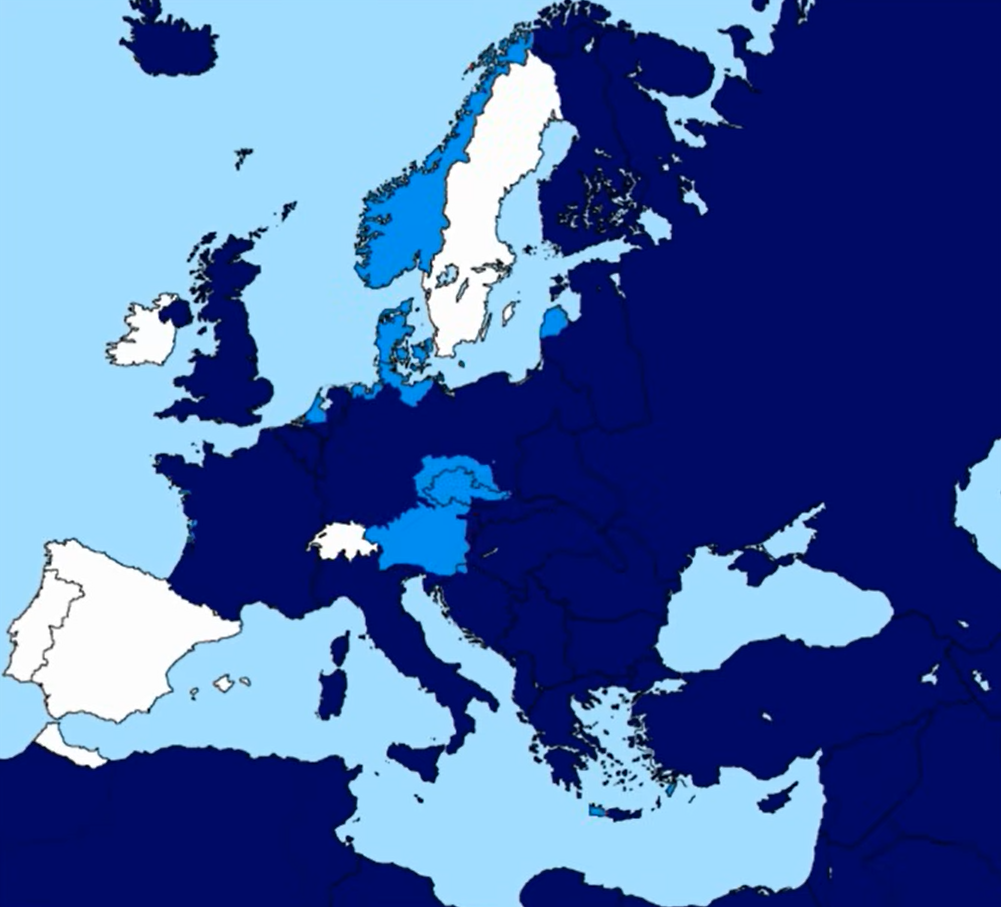
Fig. 16. A map of Europe showing Allied Powers and occupations in blue and Allied gains in light blue; screenshot from EmperorTigerstar, "World War II in Europe: Every Day," YouTube, 6:28.
August 6, 1945
The U.S. B-29 bomber Enola Gay drops the atomic bomb "Little Boy" on Hiroshima, Japan, killing an estimated 70,000 people instantly and devastating two-thirds of the city.
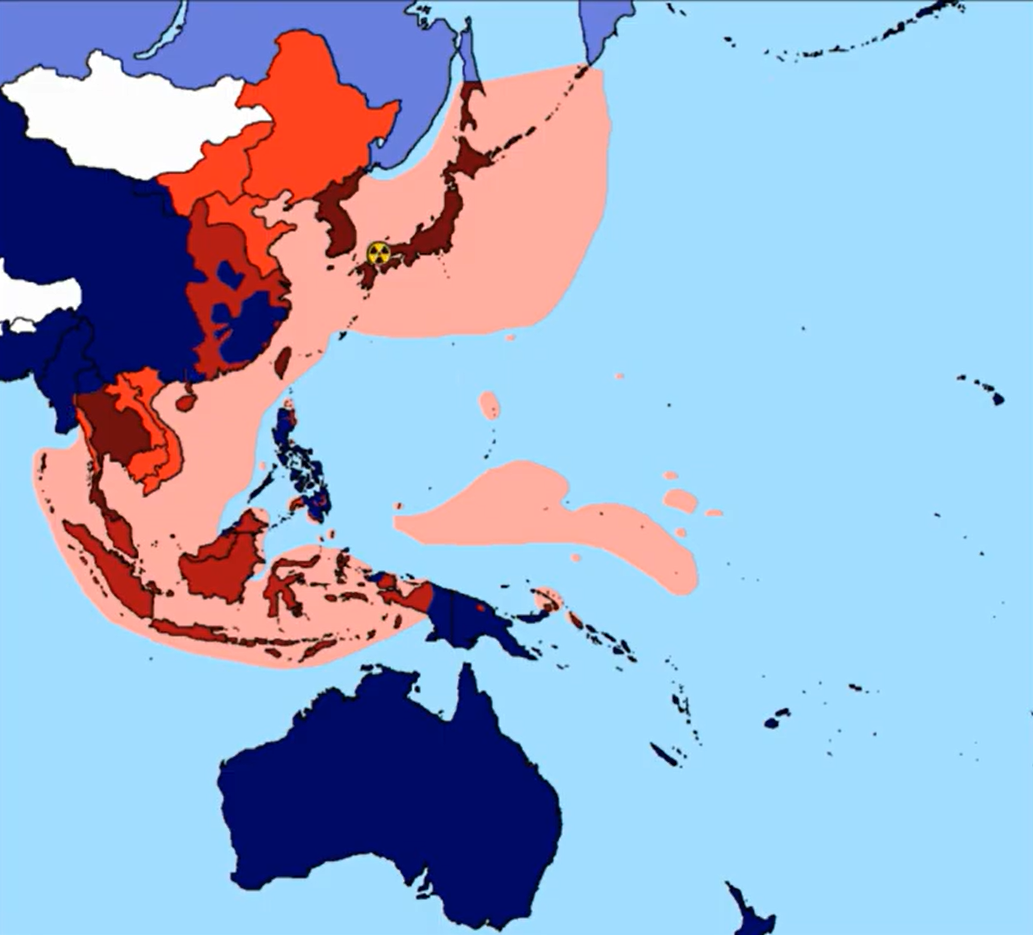
Fig. 17. A map of the Pacific showing Allied Powers and occupations in blue, Allied gains in light blue, Allied Powers not at war with Japan in gray-blue, Axis Powers in maroon, Axis occupations in burgundy, Axis puppet states in red, Axis gains in pink, and nuked cities marked with a radiation symbol; screenshot from EmperorTigerstar, "World War II in the Pacific: Every Day," YouTube, 4:25.
August 9, 1945
Diverted from its primary target of Kokura by heavy clouds, the B-29 Bockscar turns toward Nagasaki, where a plutonium bomb kills 40,000 people instantly and tens of thousands more from radiation.
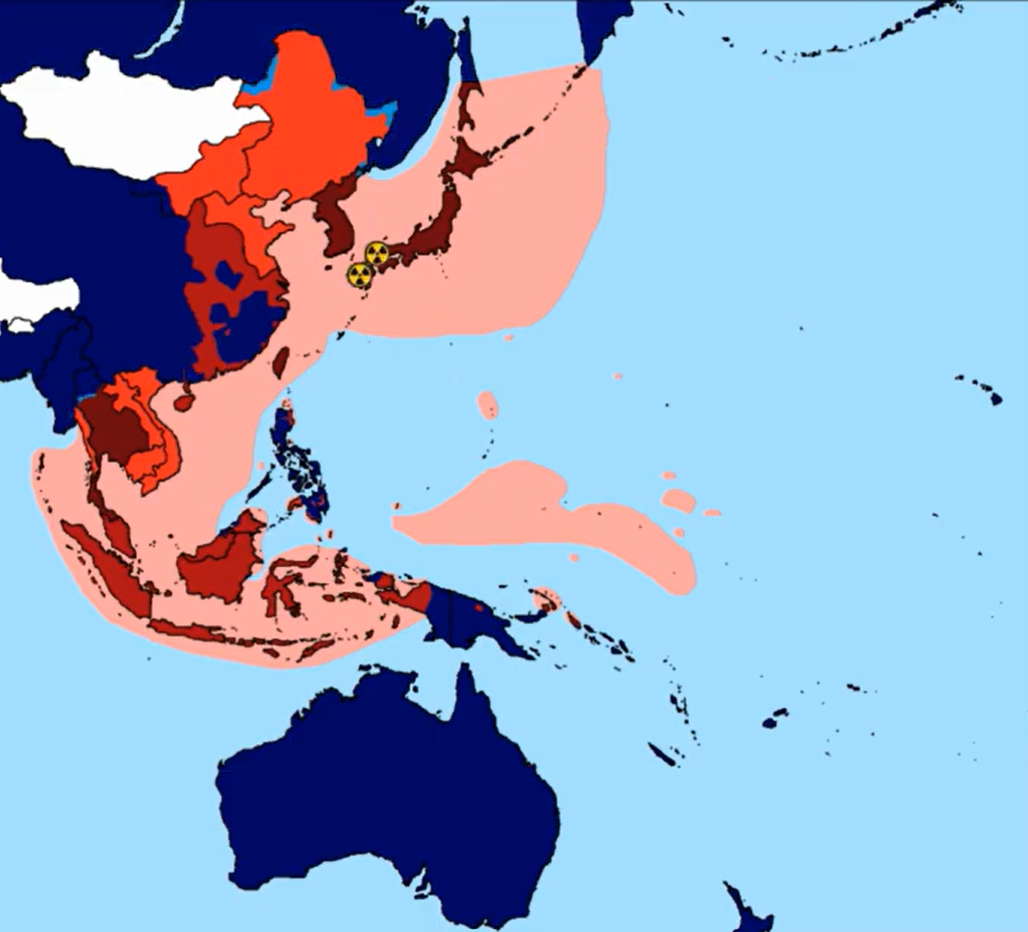
Fig. 18. A map of the Pacific showing Allied Powers and occupations in blue, Allied gains in light blue, Axis Powers in maroon, Axis occupations in burgundy, Axis puppet states in red, Axis gains in pink, and nuked cities marked with a radiation symbol; screenshot from EmperorTigerstar, "World War II in the Pacific: Every Day," YouTube, 4:25.
August 15, 1945
Allied nations celebrate Victory over Japan (VJ) Day after Japan accepts the terms of the Potsdam Declaration.
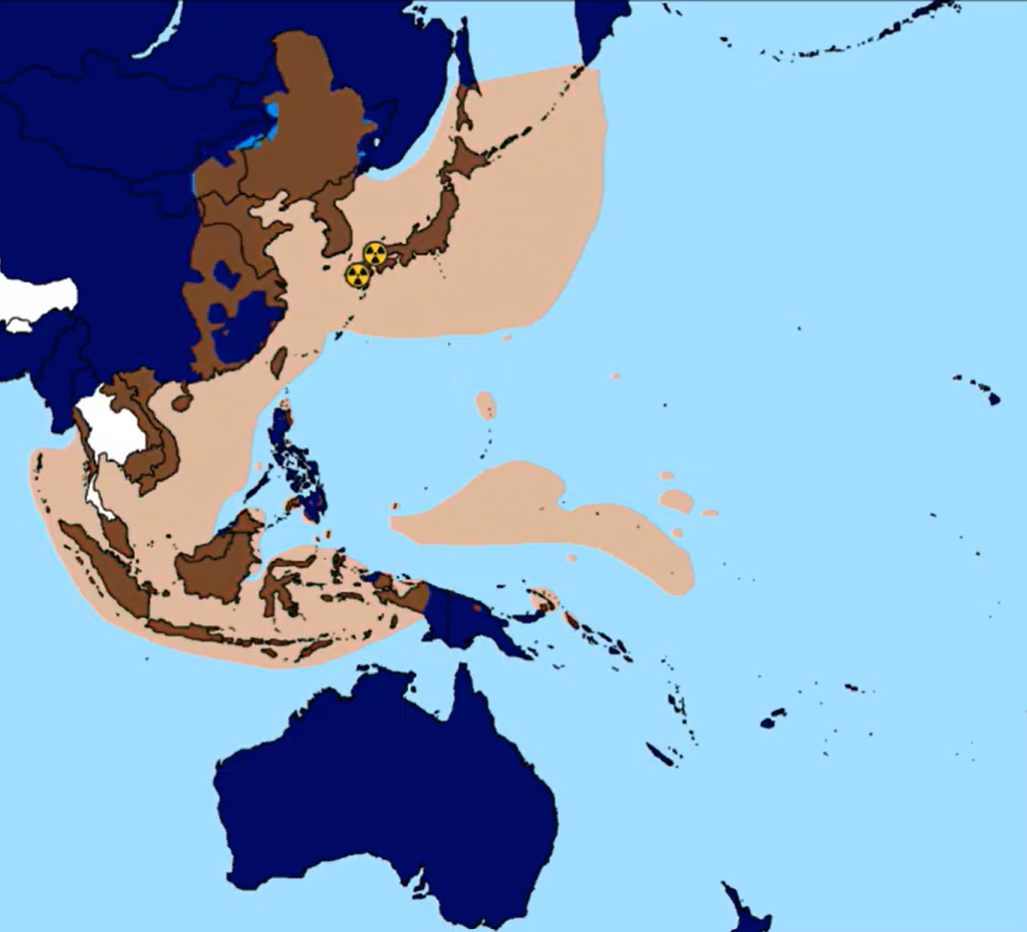
Fig. 19. A map of the Pacific showing Allied Powers and occupations in blue, Allied gains in light blue, surrendered Axis Powers in brown, and nuked cities marked with a radiation symbol; screenshot from EmperorTigerstar, "World War II in the Pacific: Every Day," YouTube, 4:27.
September 2, 1945
World War II officially ends as Japanese representatives sign the Instrument of Surrender aboard the USS Missouri in Tokyo Bay, bringing six years of global conflict to a close.
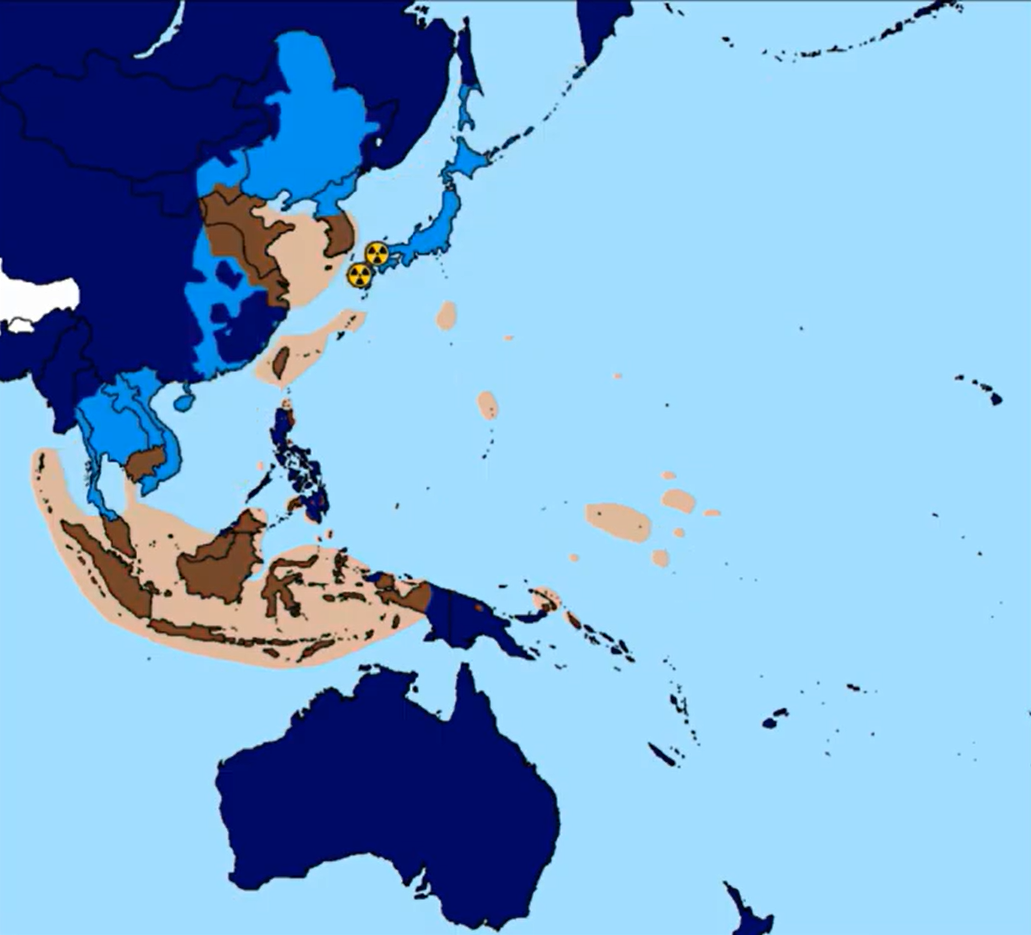
Fig. 20. A map of the Pacific showing Allied Powers and occupations in blue, Allied gains in light blue, surrendered Axis Powers in brown, and nuked cities marked with a radiation symbol; screenshot from EmperorTigerstar, "World War II in the Pacific: Every Day," YouTube, 4:32.
Bibliography
Ray, Michael. "Timeline of World War II." Encyclopedia Britannica. February 11, 2026. https://www.britannica.com/topic/Timeline-of-World-War-II.